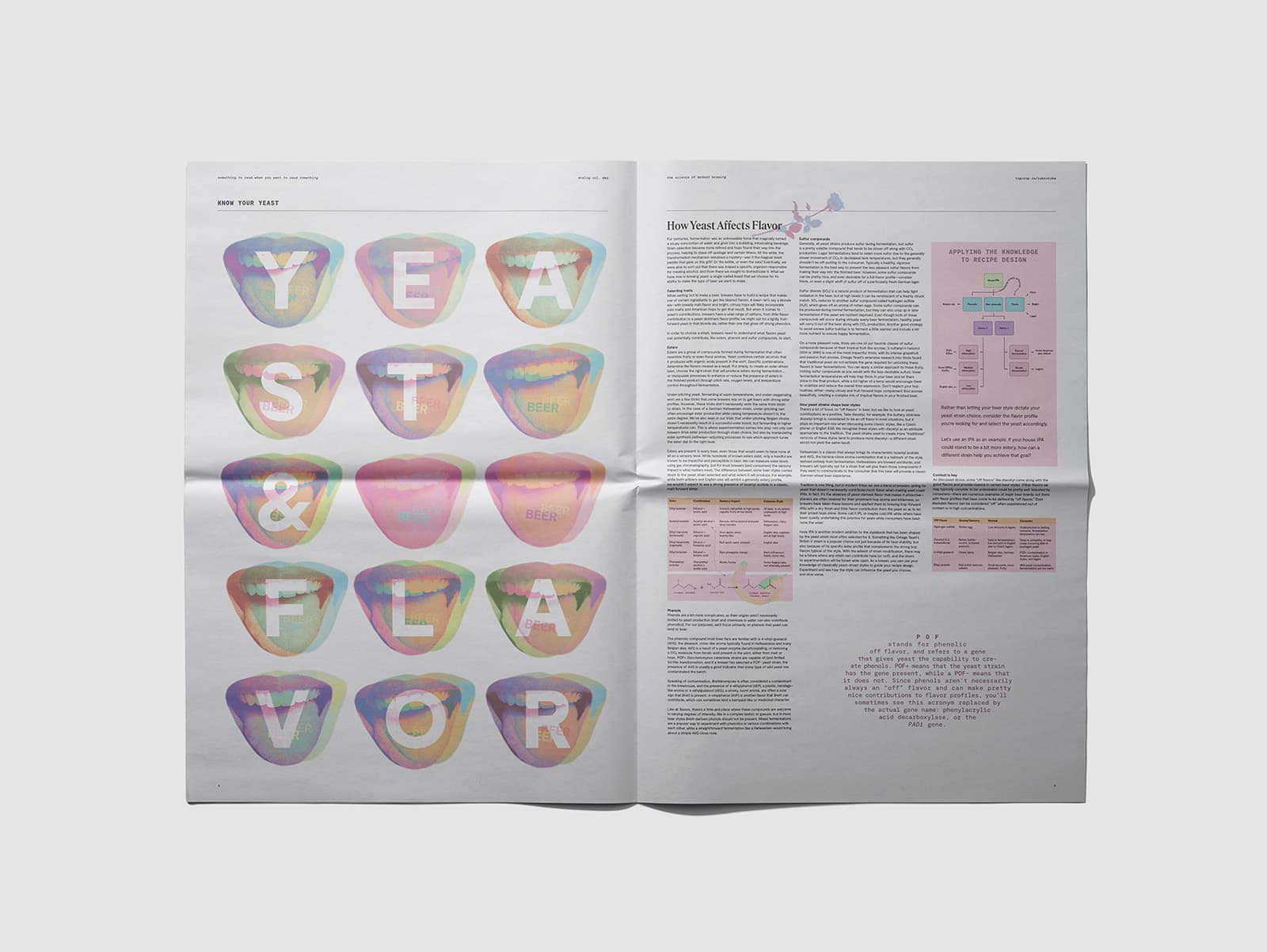
Omega Yeast is a yeast manufacturer serving craft brewers, and the team there is exceptionally good at what they do. Their R&D lab answers thousands of brewer questions a year, and behind every product is a mountain of experimentation that almost never leaves the building. Omega's owners, Mark and Lance, wanted to change that. Their idea was an education arm called Top Crop: a place to share the research, recipes, and thinking the company was already doing, without turning it into a sales channel. What they needed was a brand that could carry genuinely technical content without feeling like a textbook, and a visual system that didn't look like anything else in craft beer.
Services
Brand Identity
Website + Digital Design
Print Design
Environmental Design
Artwork + Illustration
Credits
Mark Schwarz + Lance Shaner, Co-founders
Kyle Eertmoed, Brand Design Director
Dexter Stevens, Designer
Brett Burwell, Web Developer
Kyle Romberg, Illustrator
Shana Solarte, Writer
Laura Burns, R&D Contributor
Danielle Sommer, Editor
Lisa Beck, Photographer
Recognition
STA100 Award Winner
2024 North American Guild of Beer Writers Award for Best Technical Writing, Shana Solarte
2024 Craft Beer Marketing Platinum Crushie Award for Best Website