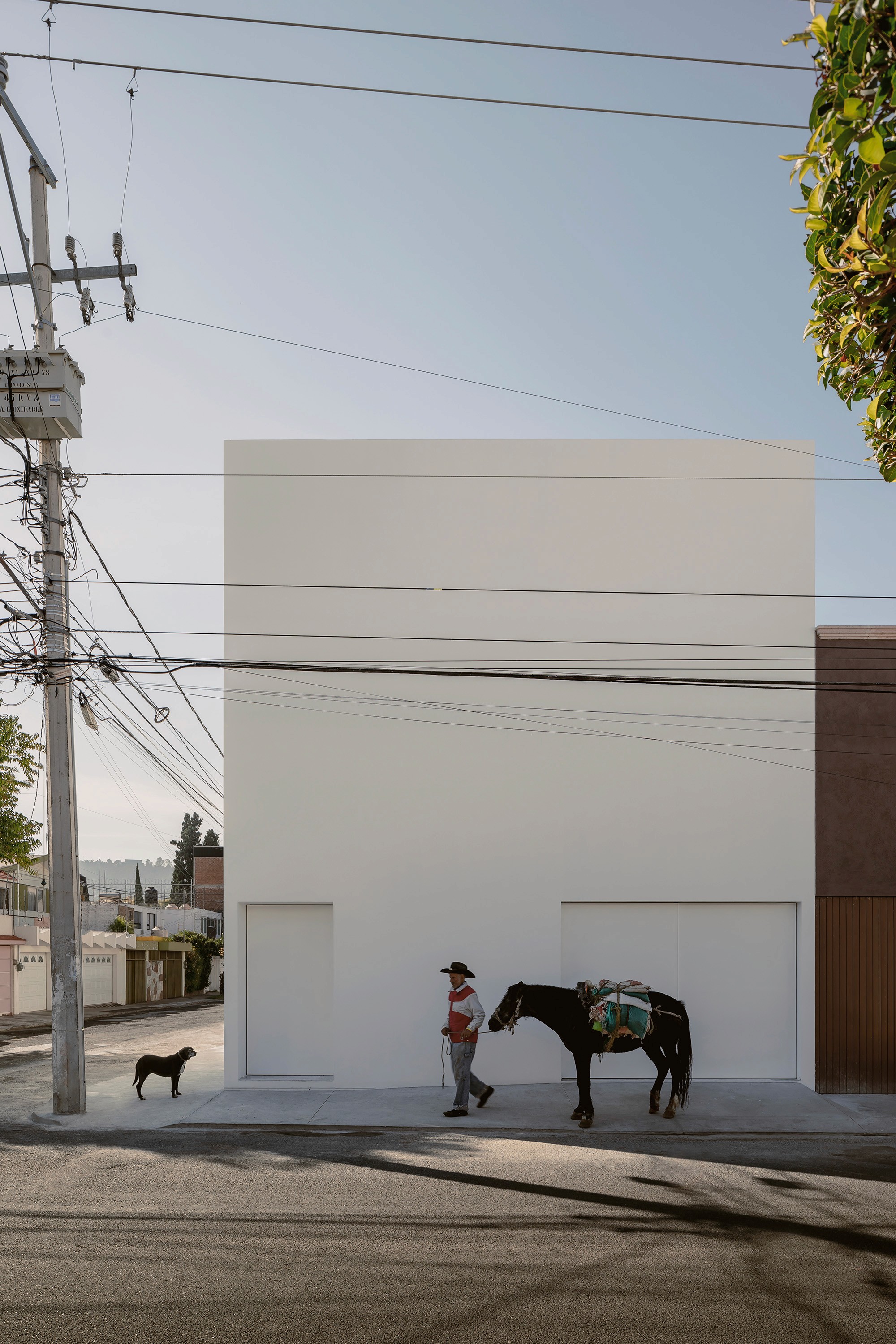
There is a small architecture firm in Morelia, Mexico that has been stopping me in my tracks. Over the past year, HW Studio’s work has shown up in my feed, each time making me pause and look closer. The photography is still, the spaces are spare, and something about their work resonates deeply with where I am heading with my own design work.
When I reached out to HW Studio, Rogelio Vallejo Bores (founder and architect) replied, “It truly means a lot to us to know that our work has stayed with you in that way — there’s something very special in that pause you describe, and it’s beautiful to feel that connection across distance.”
I’ve been thinking about why their work has that effect. And the more I look at it, the more I think it’s the clearest example I’ve found of what reductive design looks like in three dimensions. Bores calls it “essentialism.” I call it “reductivism.”
Reductive design, as I use the term, is not minimalism. Minimalism started as a philosophy and became an overused style that progressively lacked soul. Reductive design is more of a conviction: finding what matters by removing what doesn’t. And the beauty comes in an artist’s or designer’s interpretation of “what matters.”
I’ve been building a case study series around this idea, looking for practitioners in any field who have arrived at this same place from their own direction. HW Studio arrived there through architecture, and they went further than most.
It starts with a name
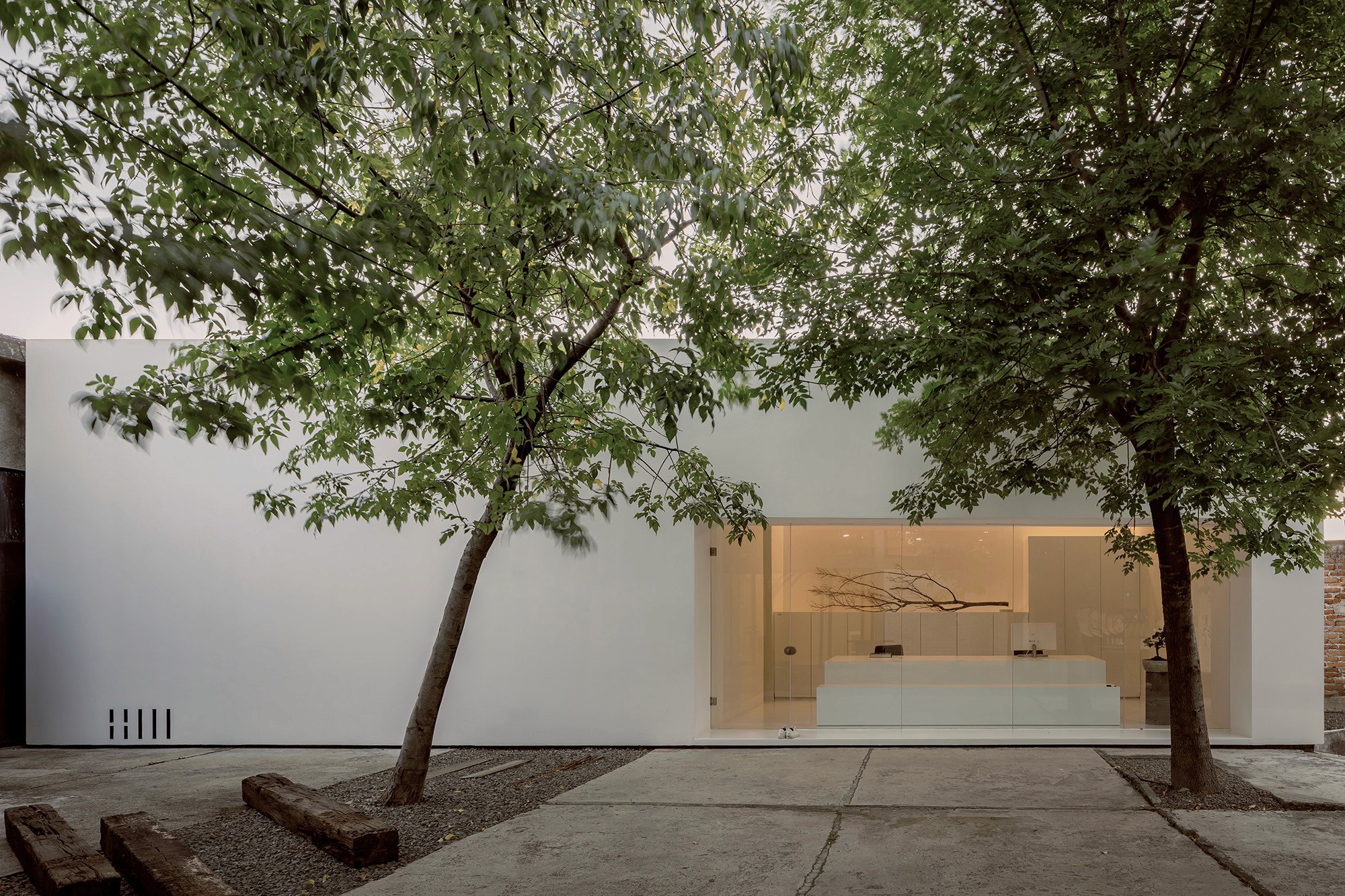
In Spanish, the letter H makes no sound. It is the graphic representation of silence. The W comes from wabi-cha, the Japanese tea ceremony from which principles like wabi-sabi are derived. The studio didn’t name itself after its founder, a location, or an aspiration. It named itself after an idea. Two letters that point at what the work is trying to do before a single wall is drawn.
HW Studio was founded in Morelia during a period of significant violence in Mexico. That context matters. The founding premise wasn’t aesthetic, it was urgent: to create spaces that remind people what peace feels like. Meditation is part of their creative process, not as a retreat from the work but as the engine of it. Their stated goal is eliminating from architecture everything that is not essential, so that through conscious contemplation, states of inner peace can be reached.
Before any project begins, founder Rogelio Bores and his team study what they call three variables: the place, the user, and the designer. They make multiple site visits, listening, in Bores’s words, to the site’s “soft and particular murmurs.” Clients complete a personality profile administered by a neuropsychologist who is a core member of the studio. Then Bores meditates silently on everything gathered. Only after completing all three does the architecture begin.
The studio works on one project at a time.
Three months per project.
Four projects per year.
The constraint is their method, which clearly produces desirable outcomes. It’s easy to say you believe in depth over volume. It’s another thing to build a practice around it.
The Hill in Front of the Glen
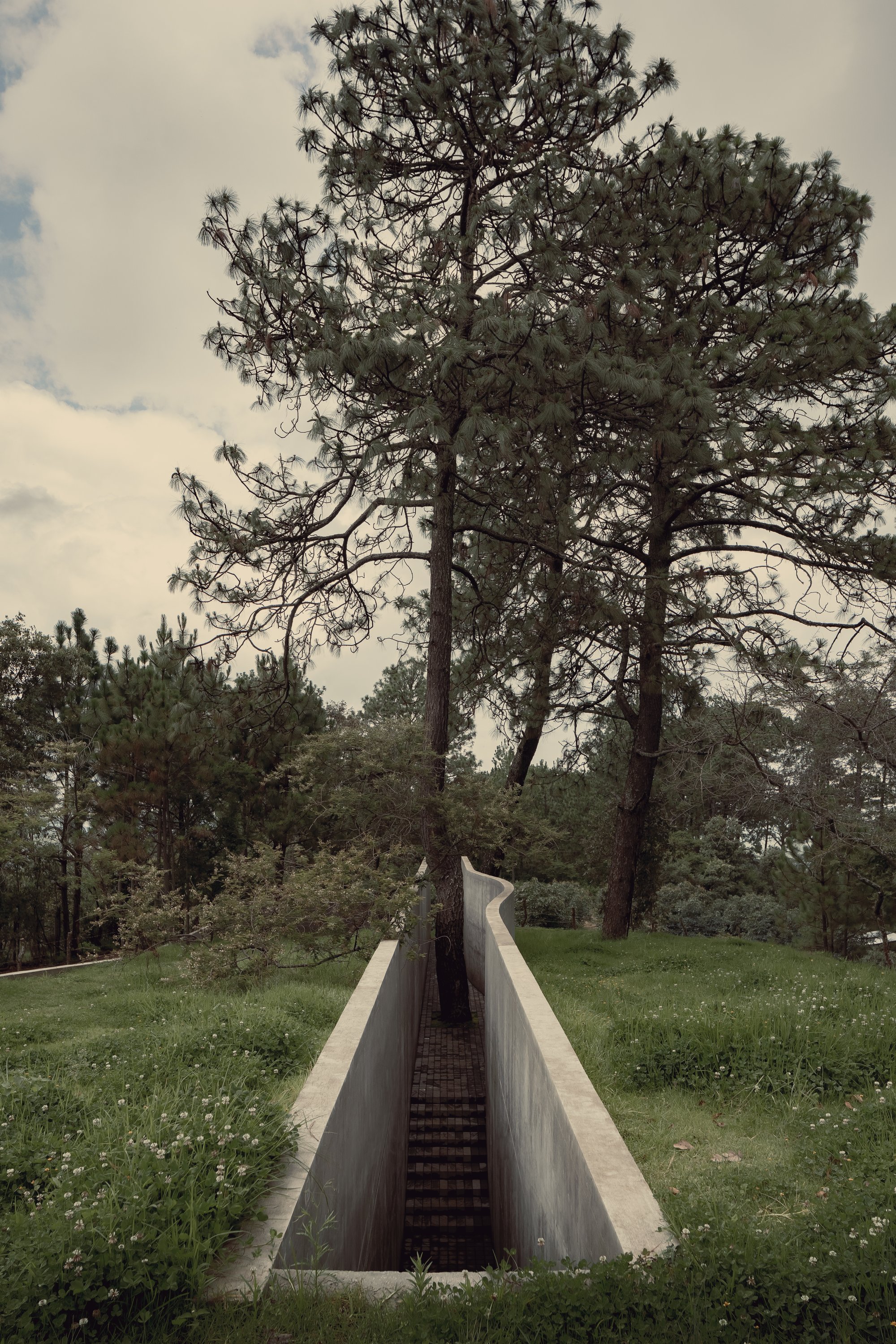
The Hill in Front of the Glen, completed in 2021 and set in the forests outside Morelia, doesn’t sit on the landscape. It hides inside it. The design began with a single question: how can one feel protected? The answer Bores arrived at was a child pulling a bedsheet over his head. The simplest form of shelter.
So he raised a sheet of grass. Two concrete walls emerge from the ground to bear the weight of an artificial hill, two more to frame the entrance and escort visitors inward. The approach path is deliberately narrow — wide enough to walk alone, too narrow to walk accompanied. Visitors arrive in solitude. They pass a tree of such presence that one wall bends gently to accommodate it, close enough to graze as you pass. Then stone steps down, a heavy steel door, and a vaulted concrete ceiling that gives the sensation of a cave — cold, dark, but deeply safe.
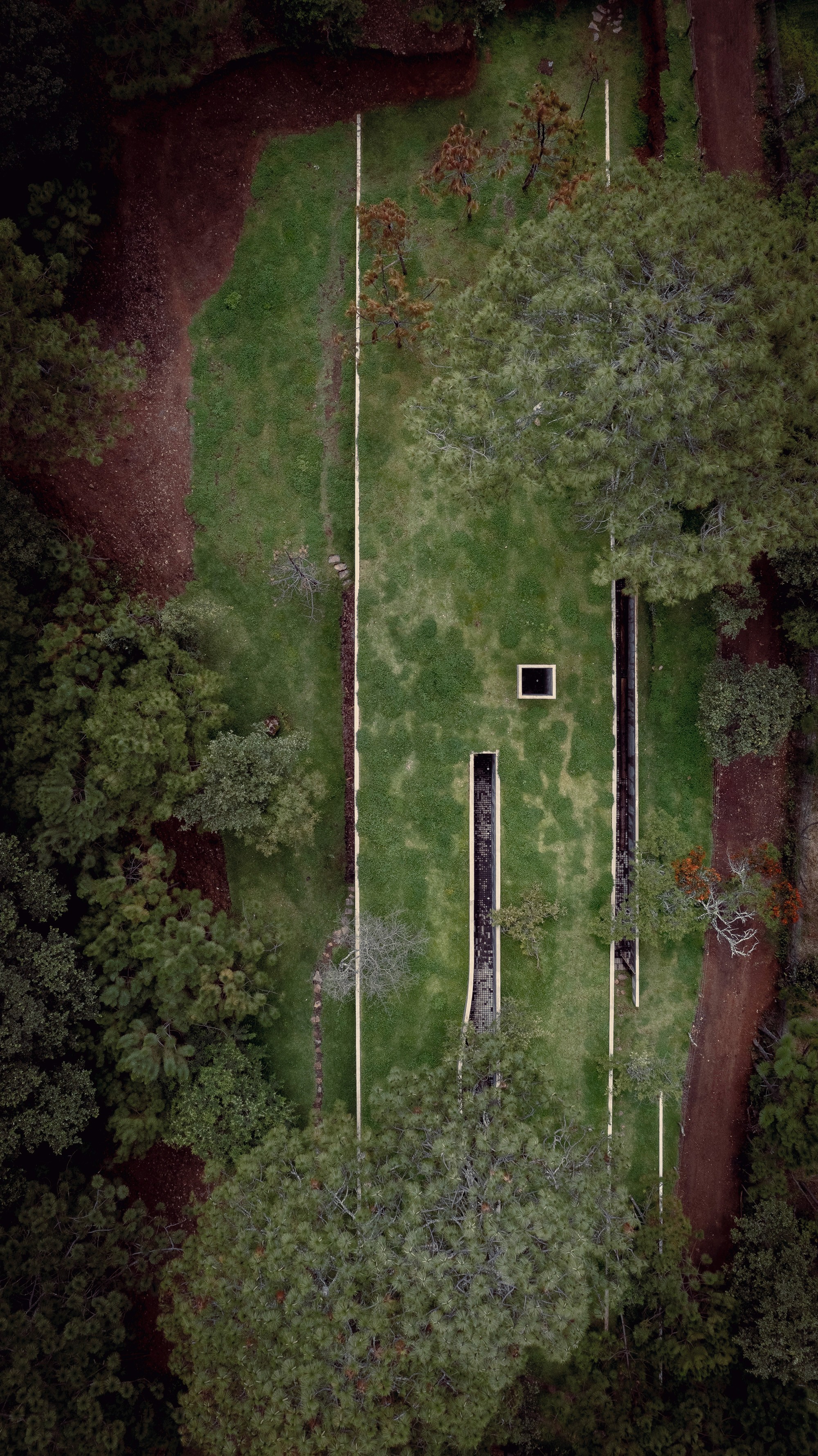
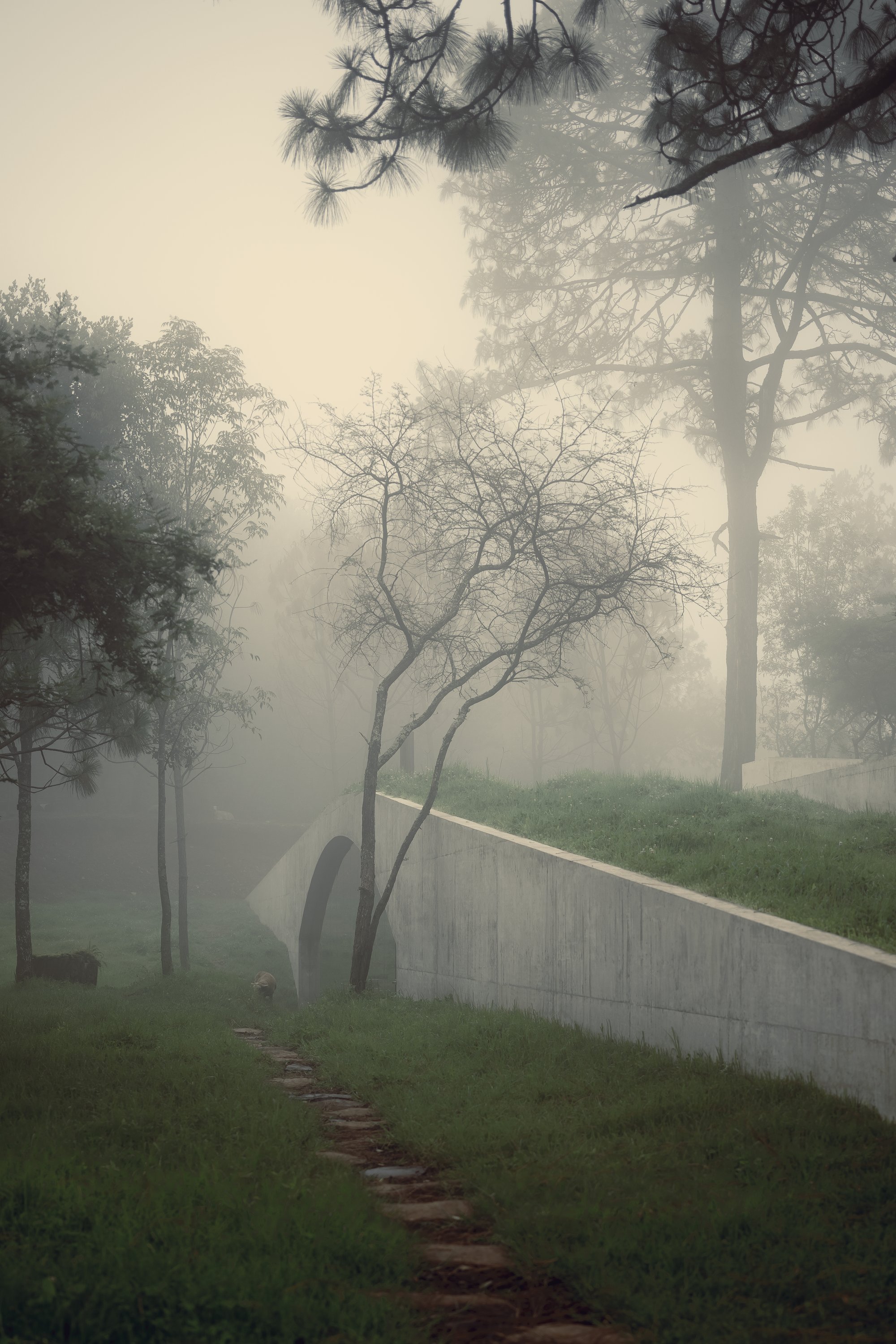
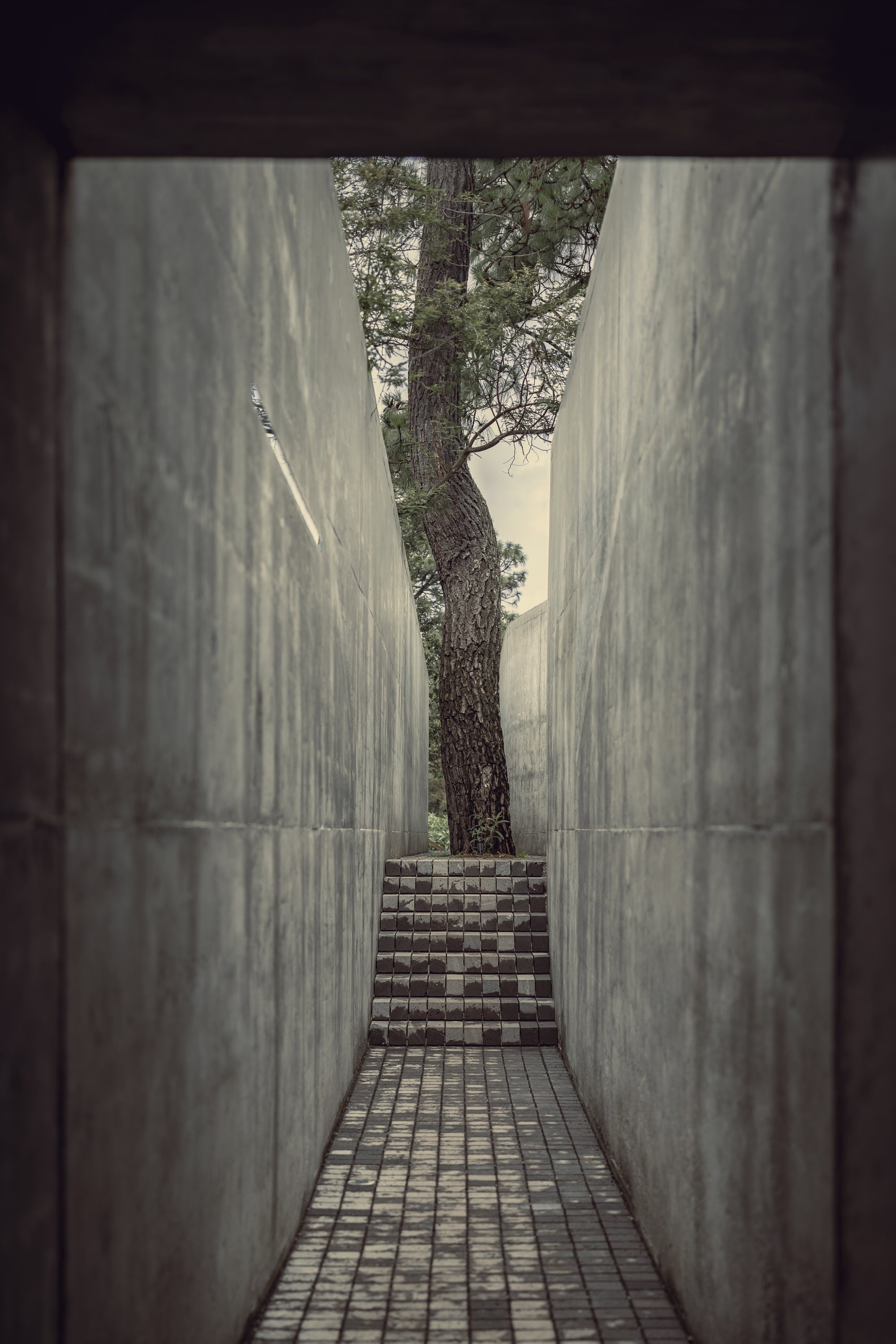
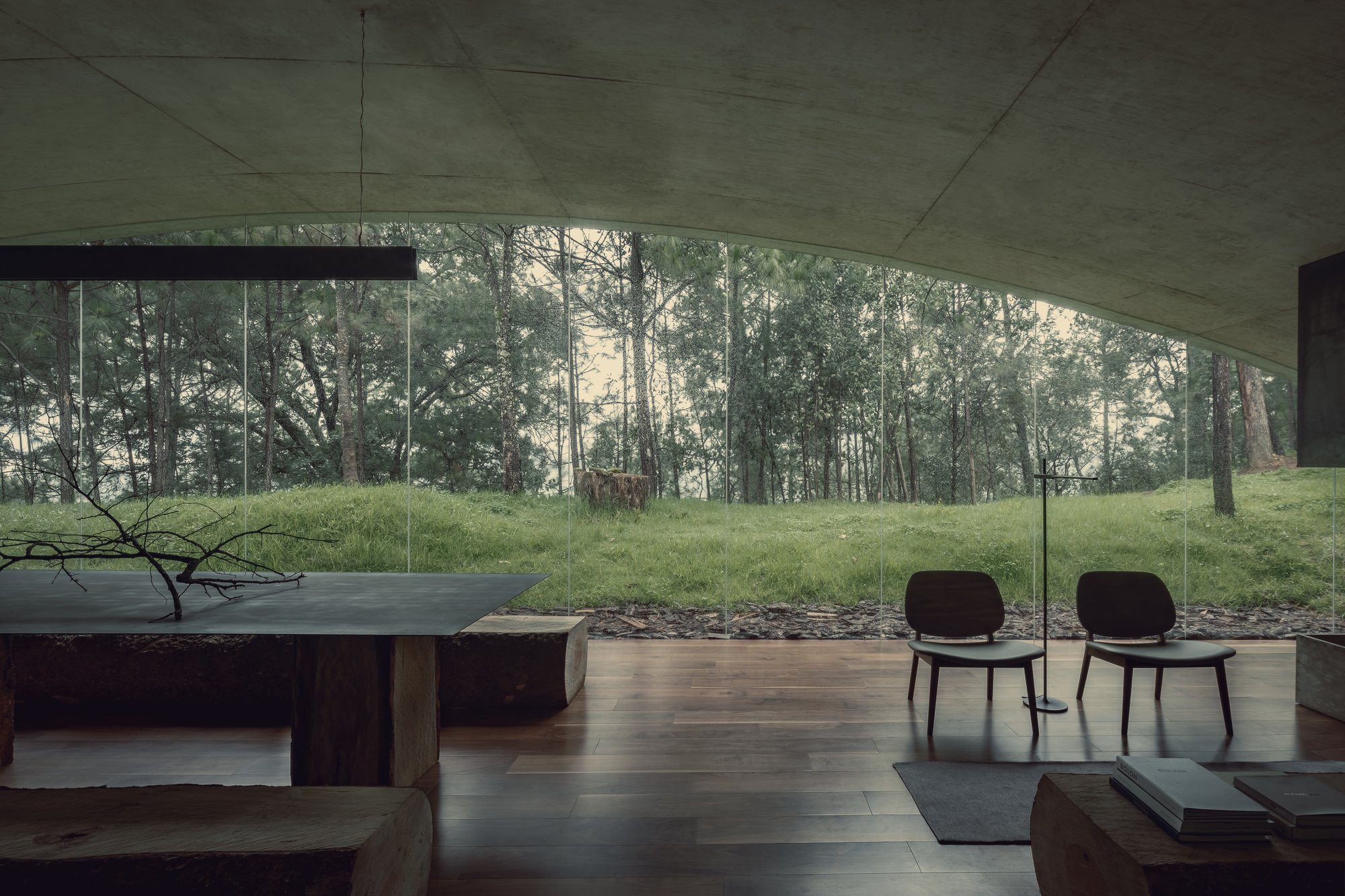
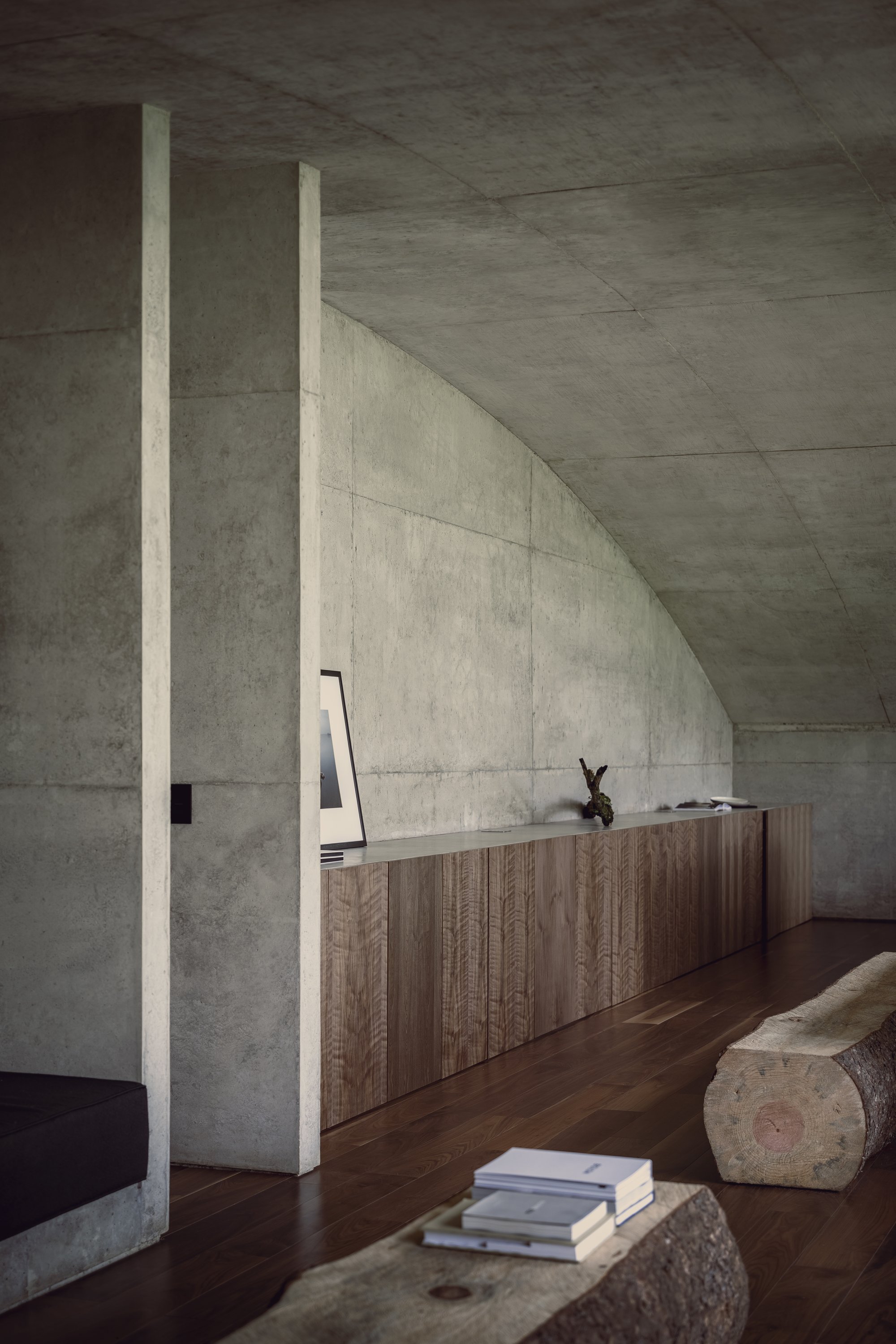
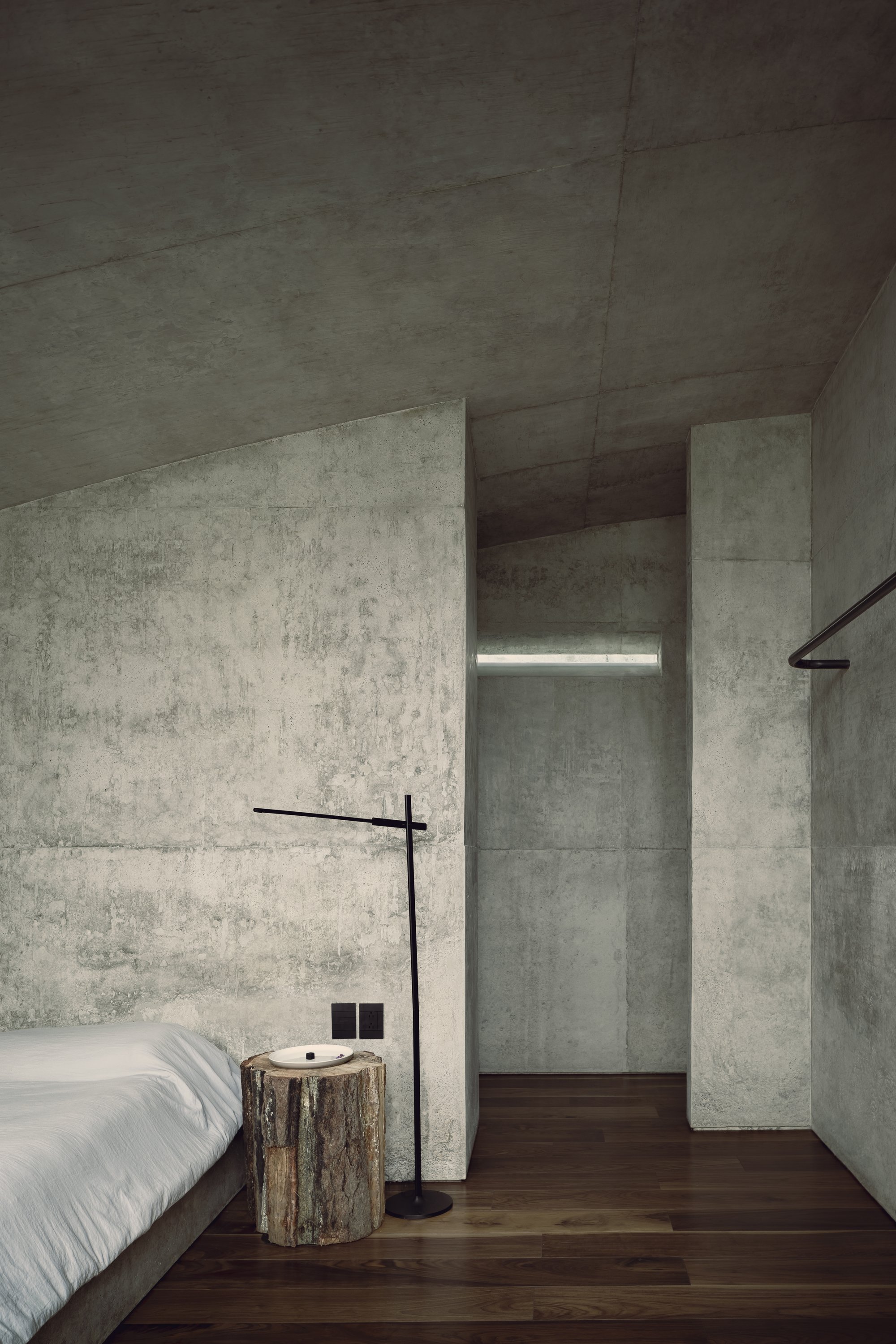
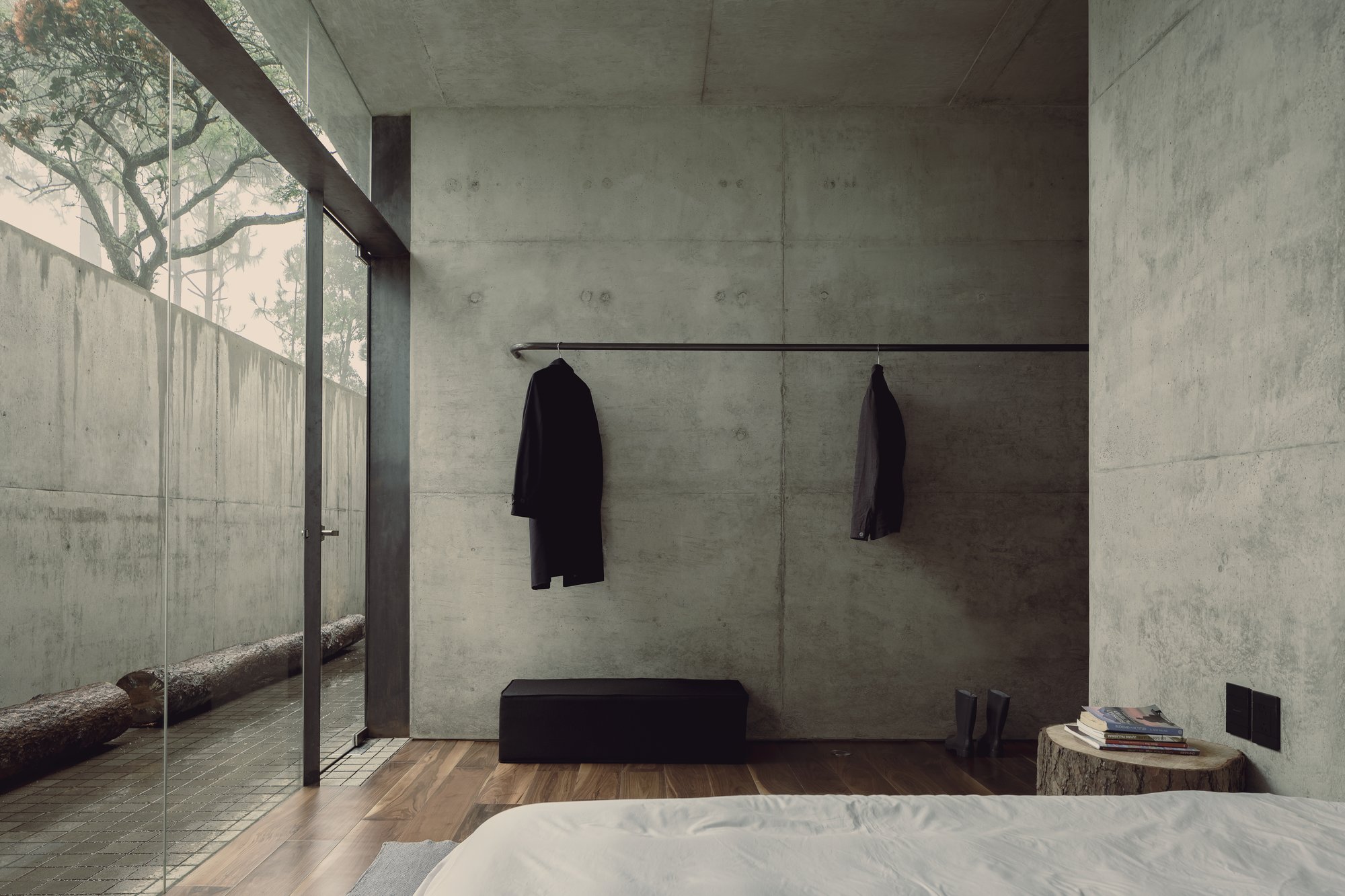
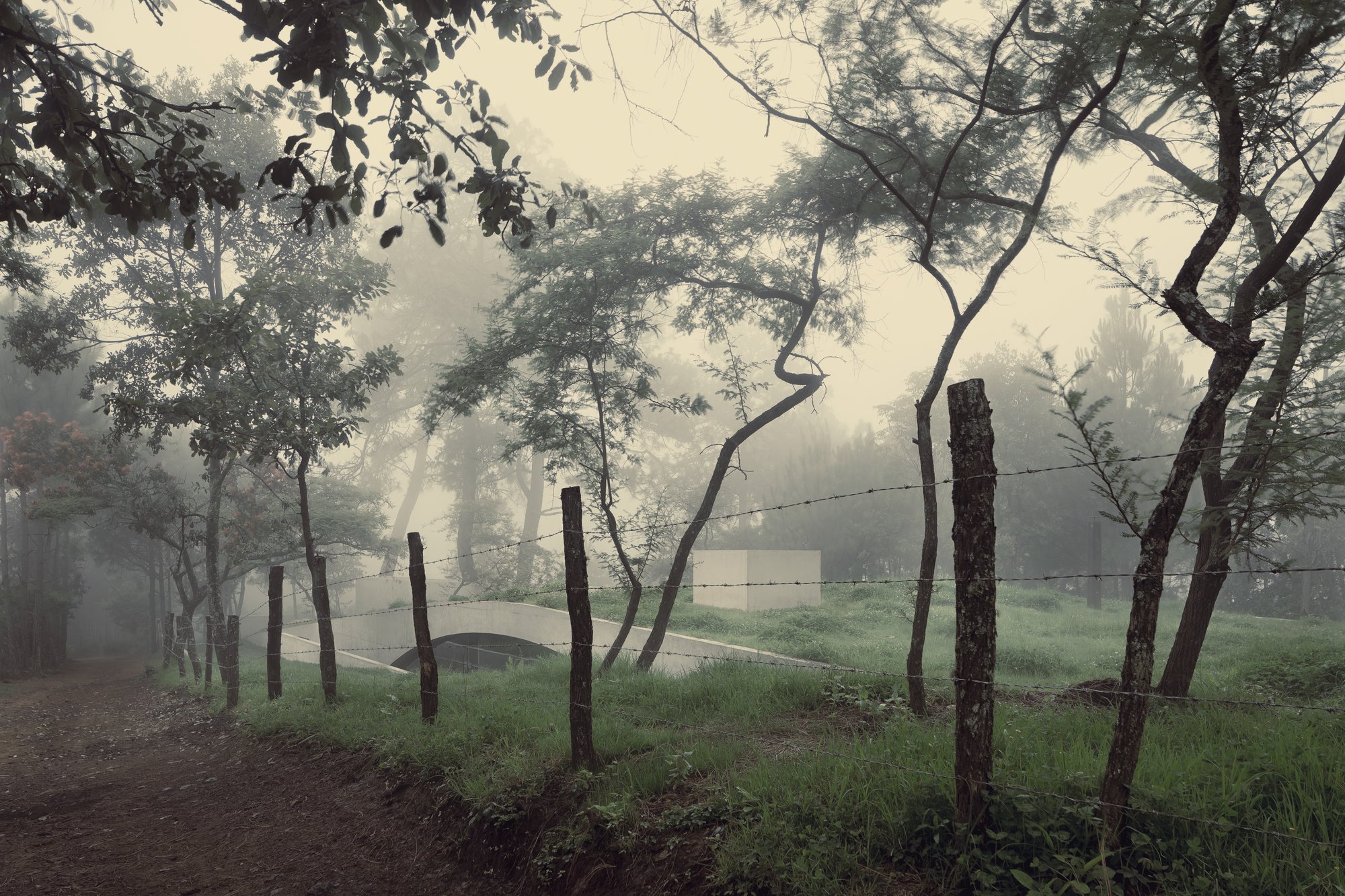
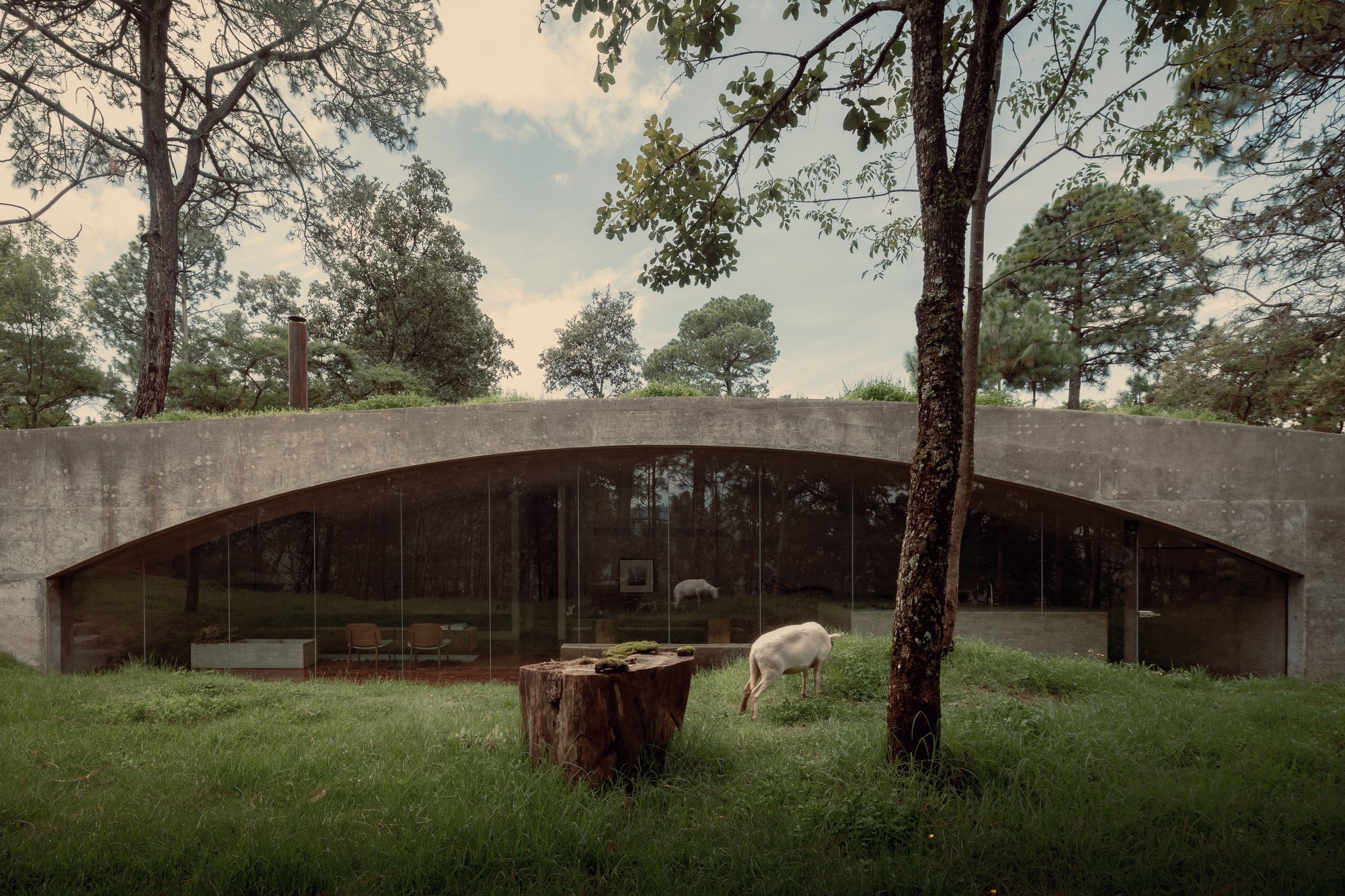
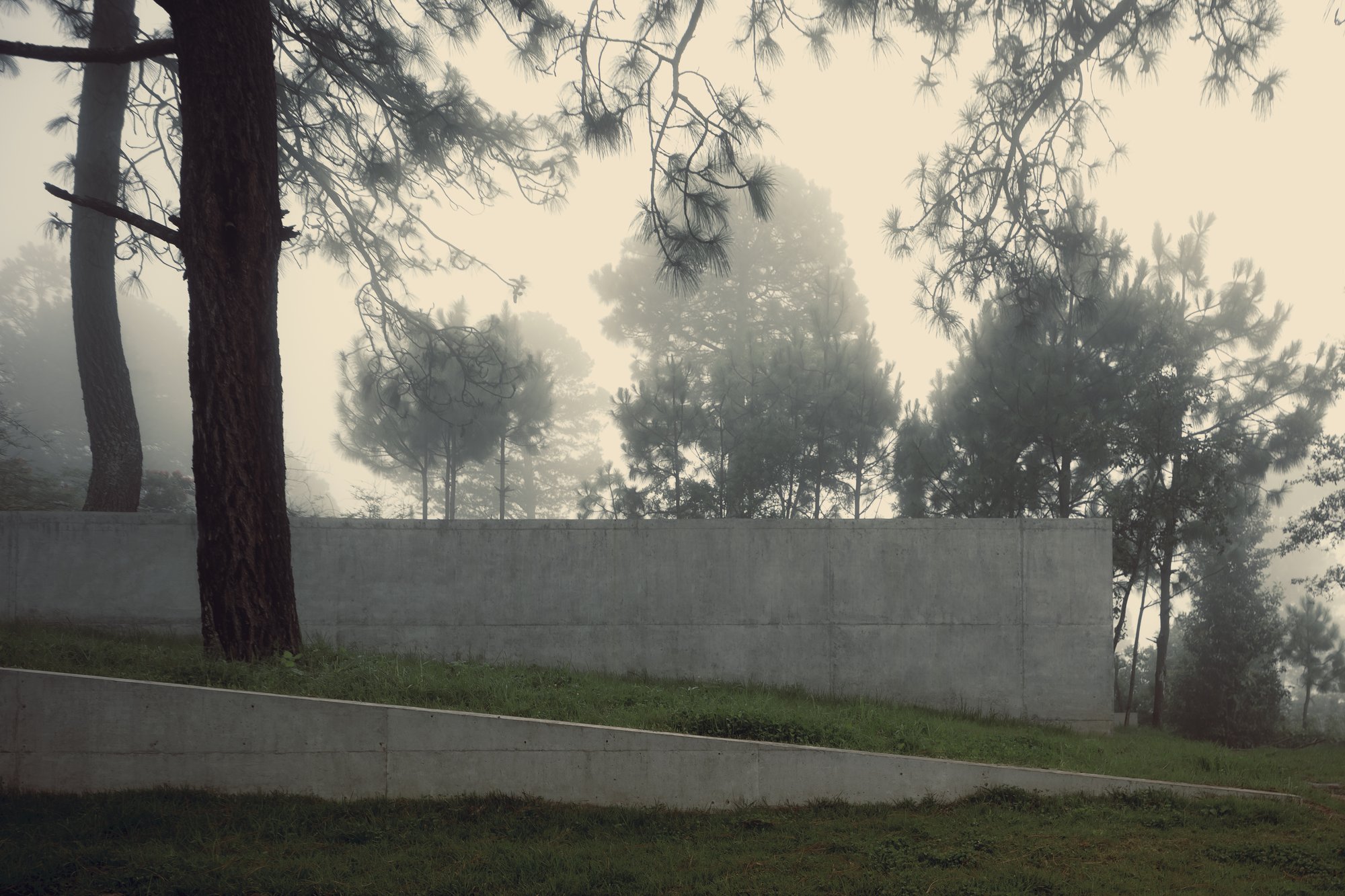
The appliances are hidden. The lighting is discreet. The palette is four materials: stone, wood, concrete, steel. Nothing inside connects to a specific moment in time. The studio described the intention plainly: the architecture should be an accent on the poem, a comma or a question mark, but never the poem itself. The poem is the pines, the oaks, the fireflies, the nightingale.
Azure Magazine, in naming HW Studio the inaugural winner of the AZ Awards Emerging Architecture prize), described the Glen house as seeming “as primordial as the mound of earth that shrouds it.” It’s a precise observation. The building doesn’t read as architecture so much as geology — something the land produced rather than something placed on it.
Casa Enso II
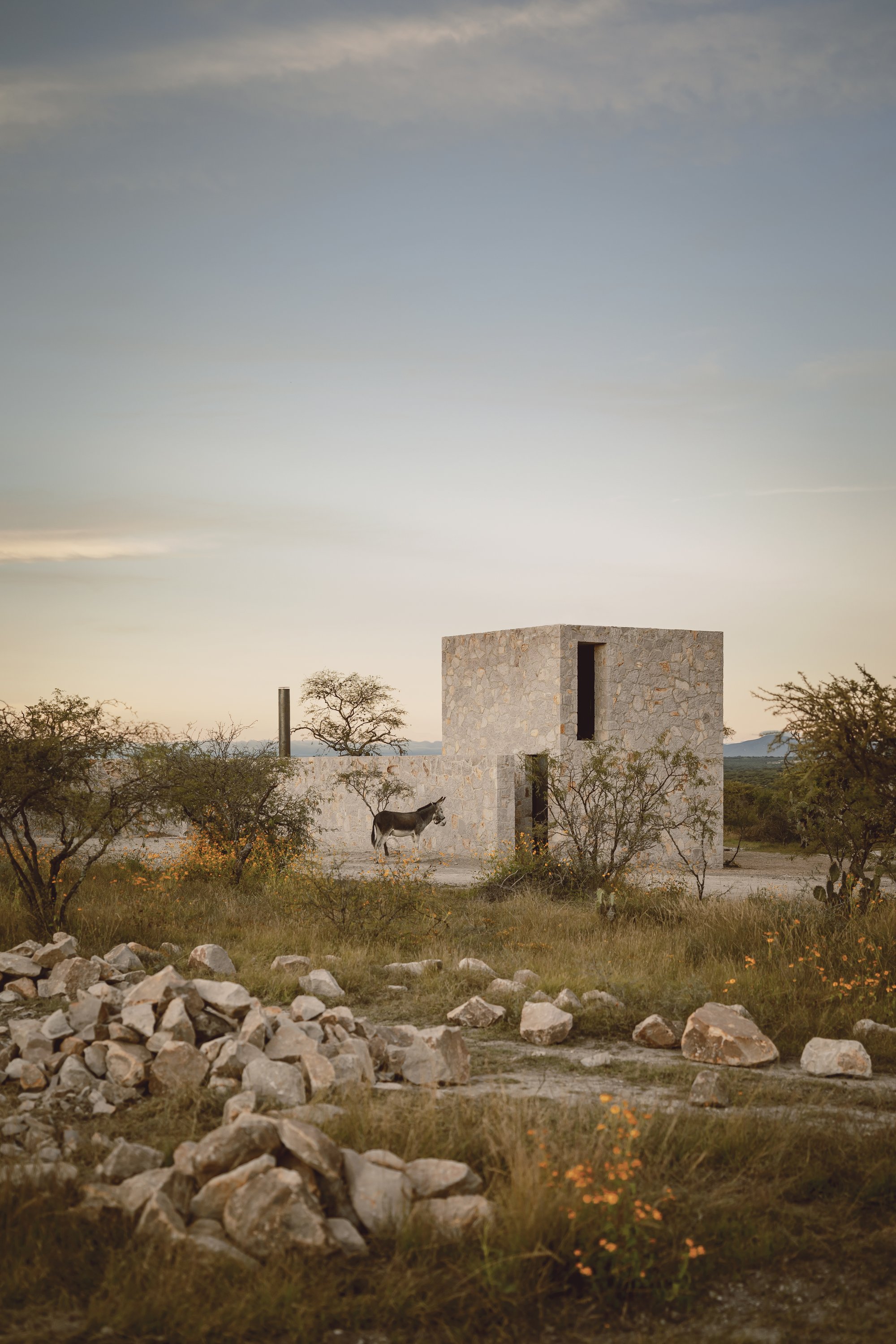
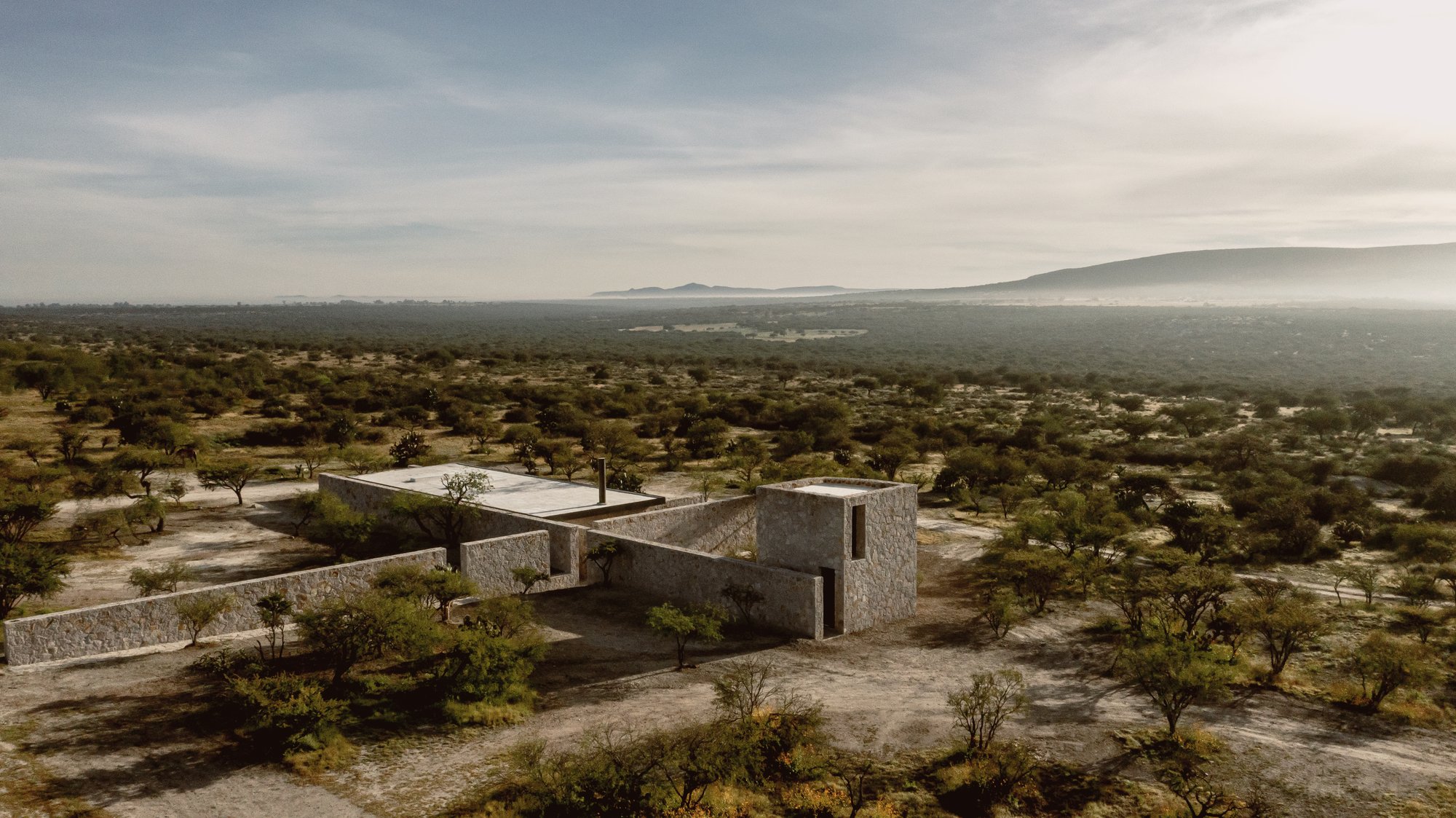
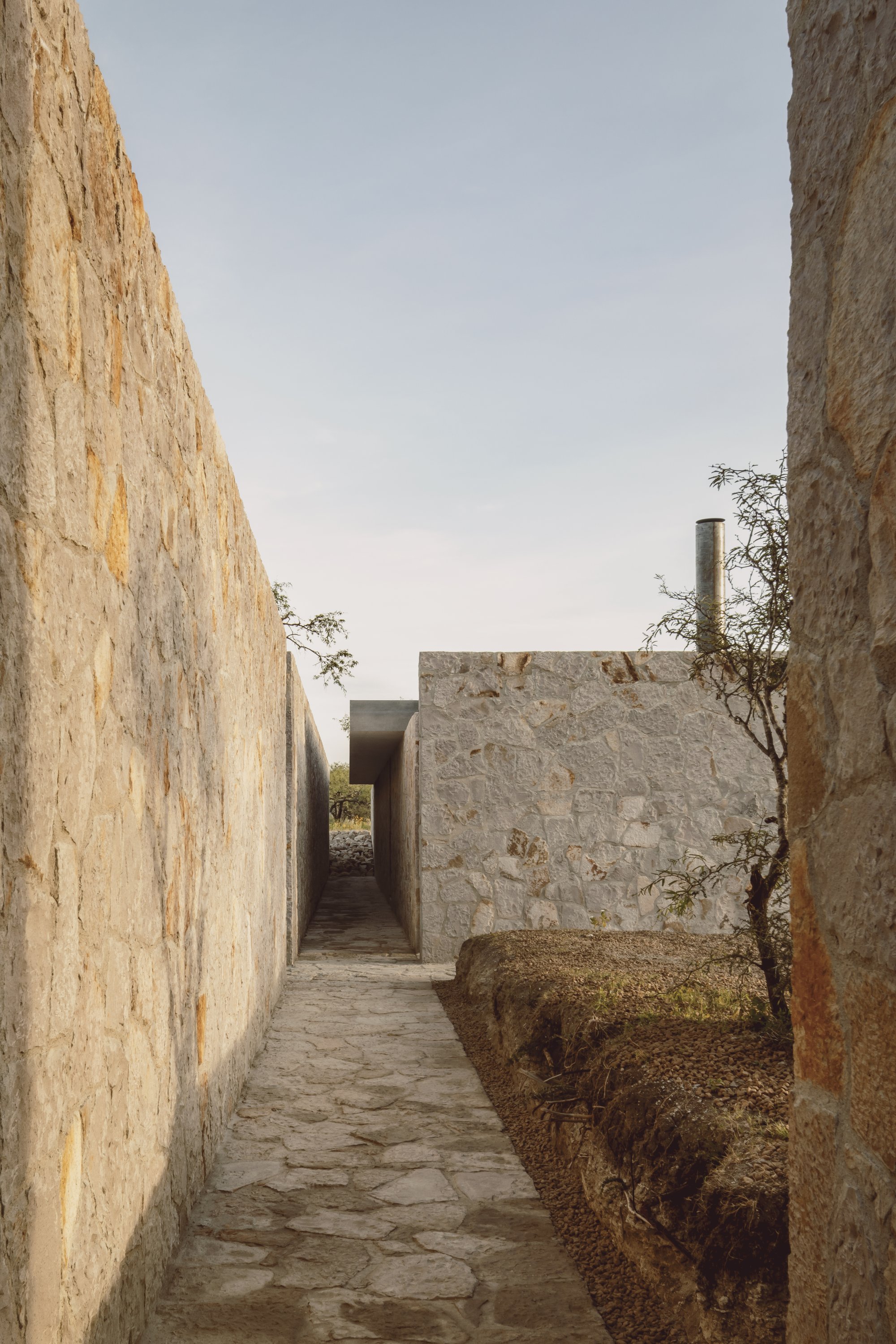
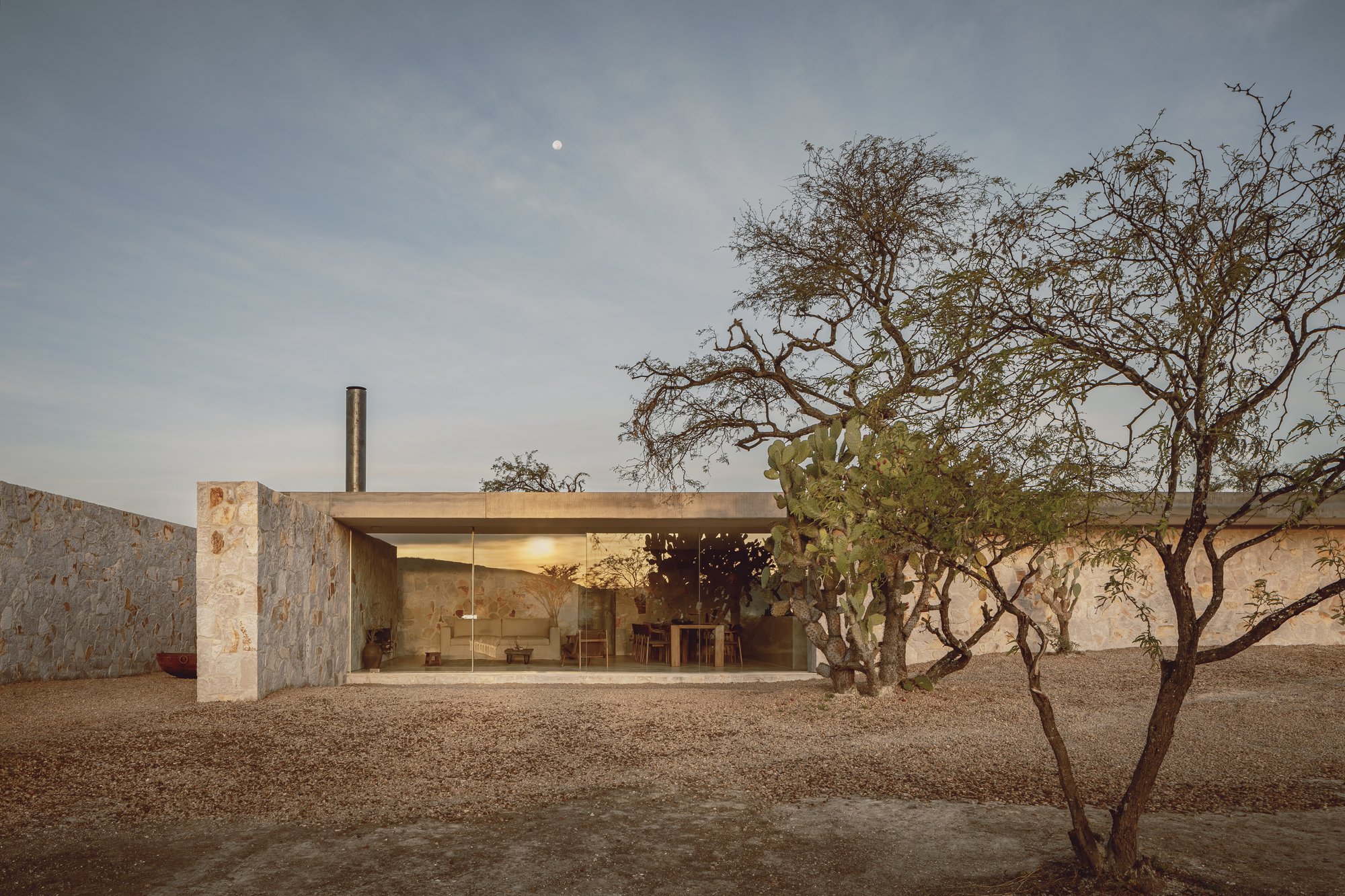
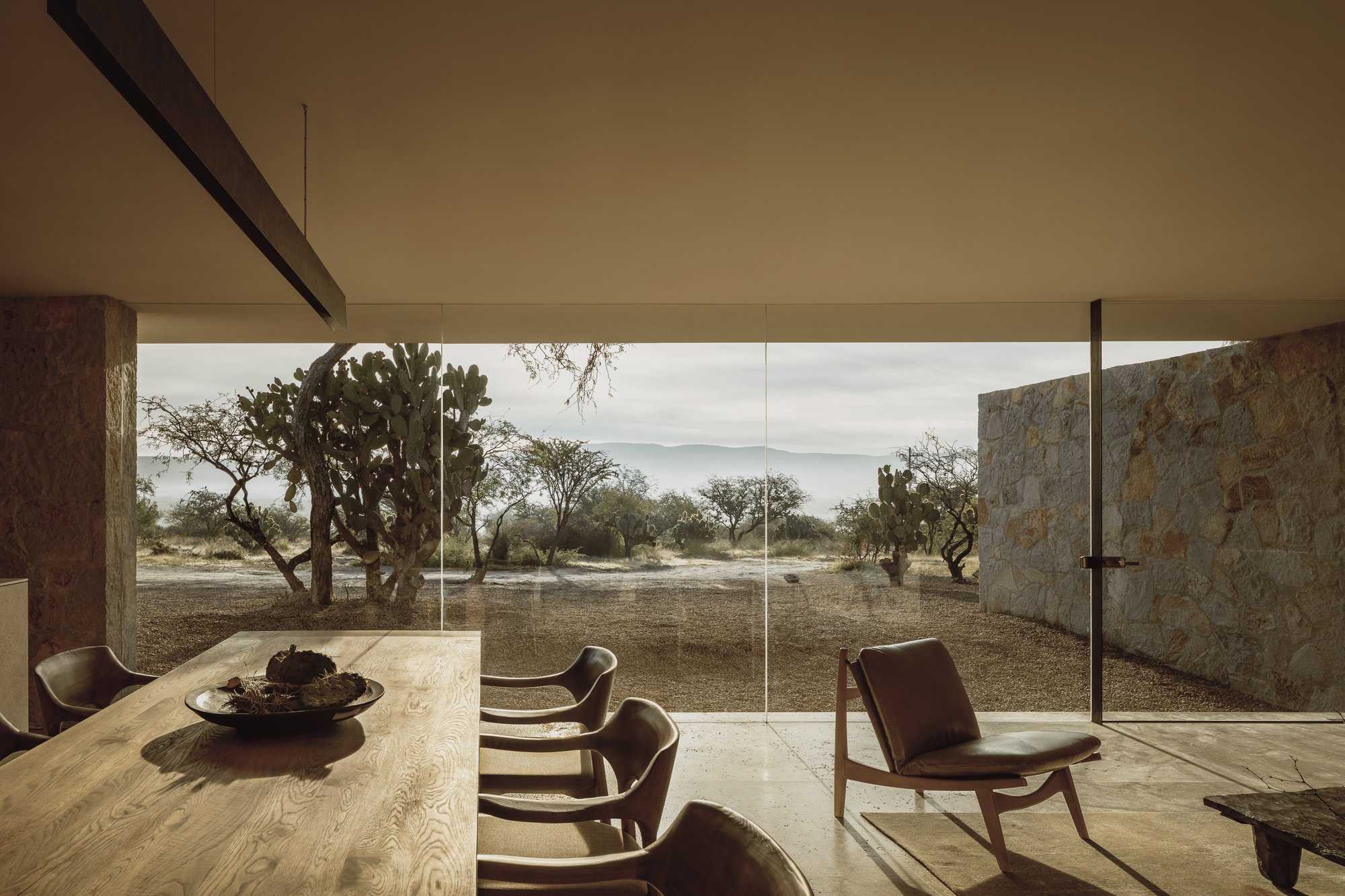
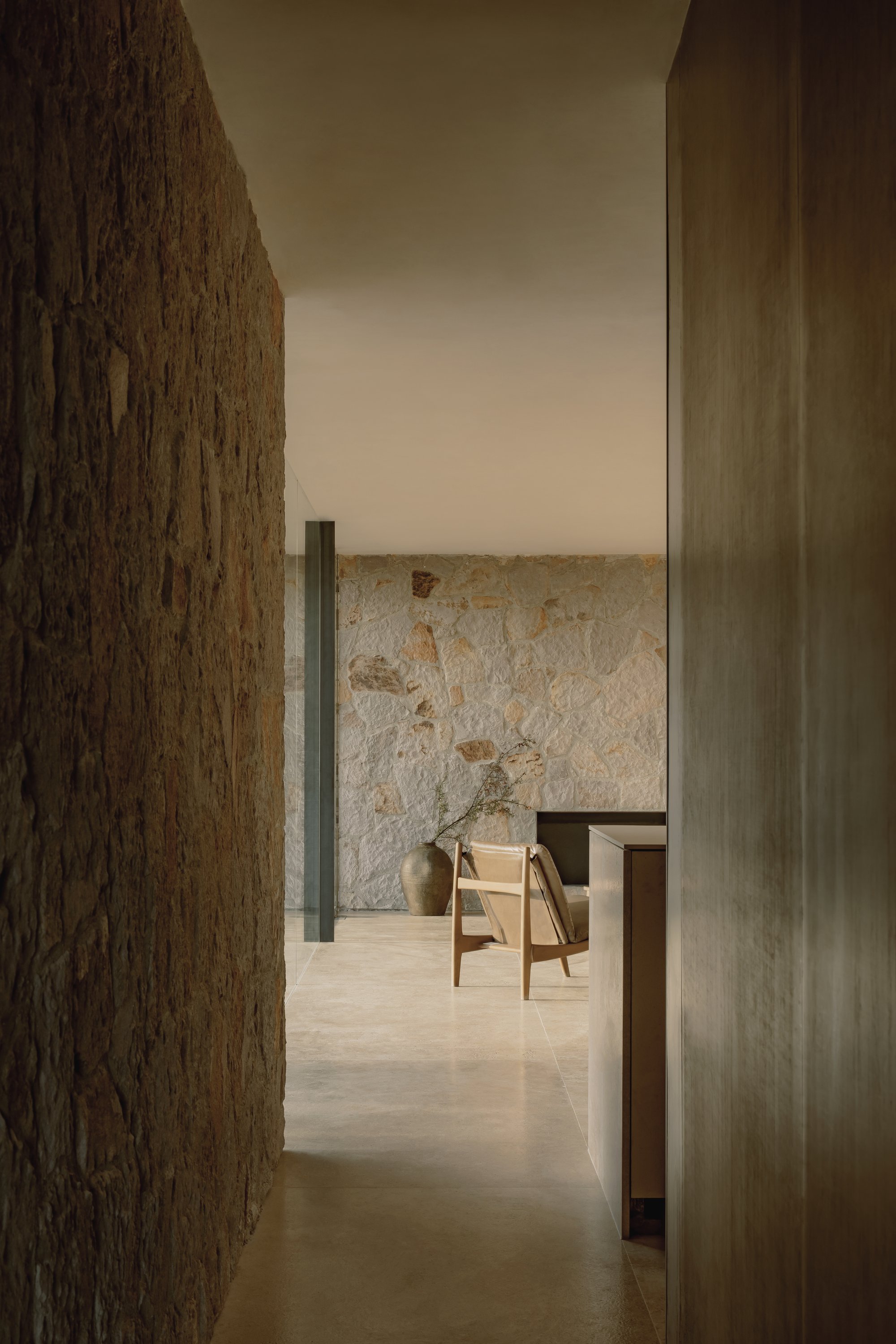
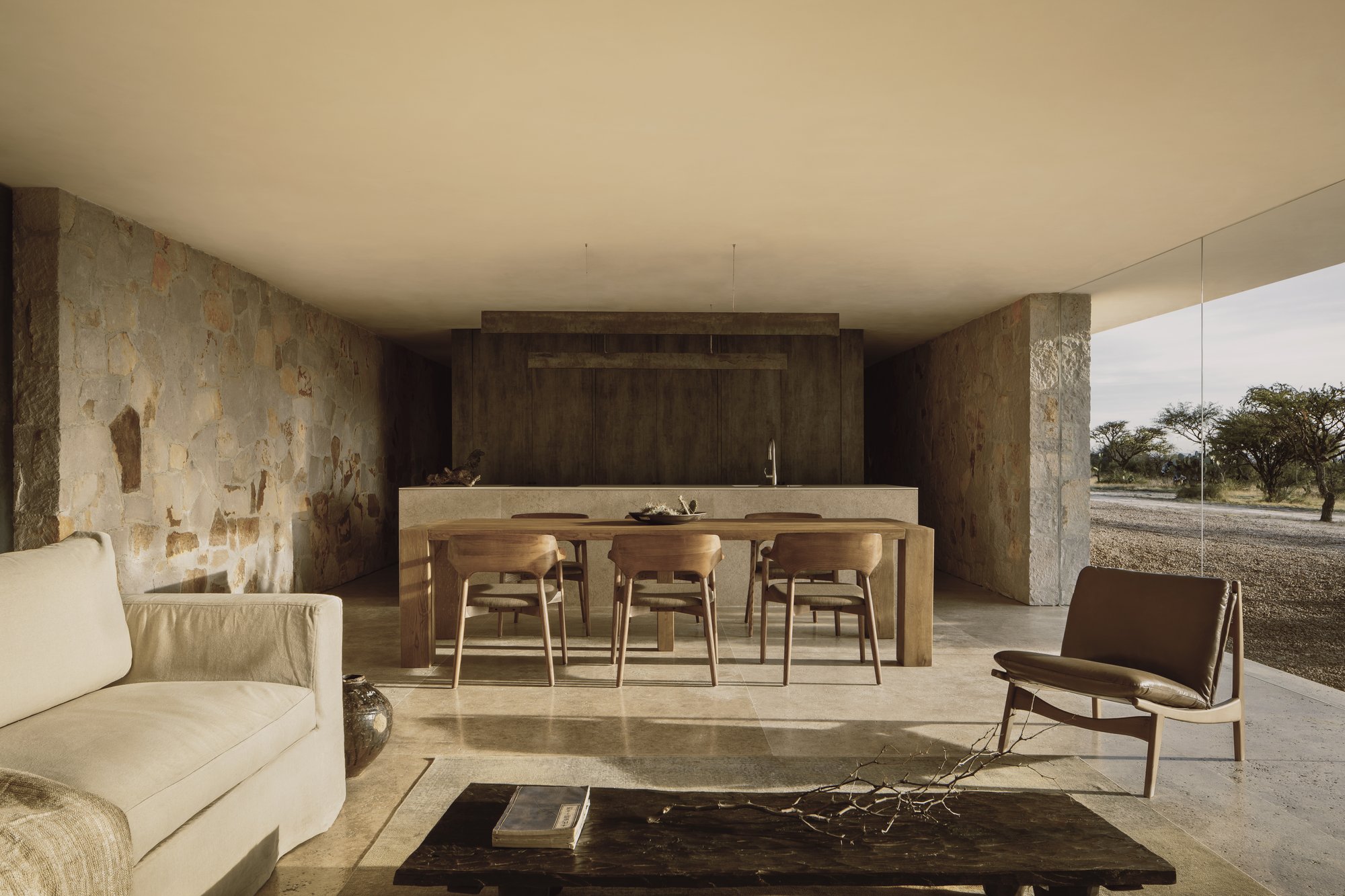
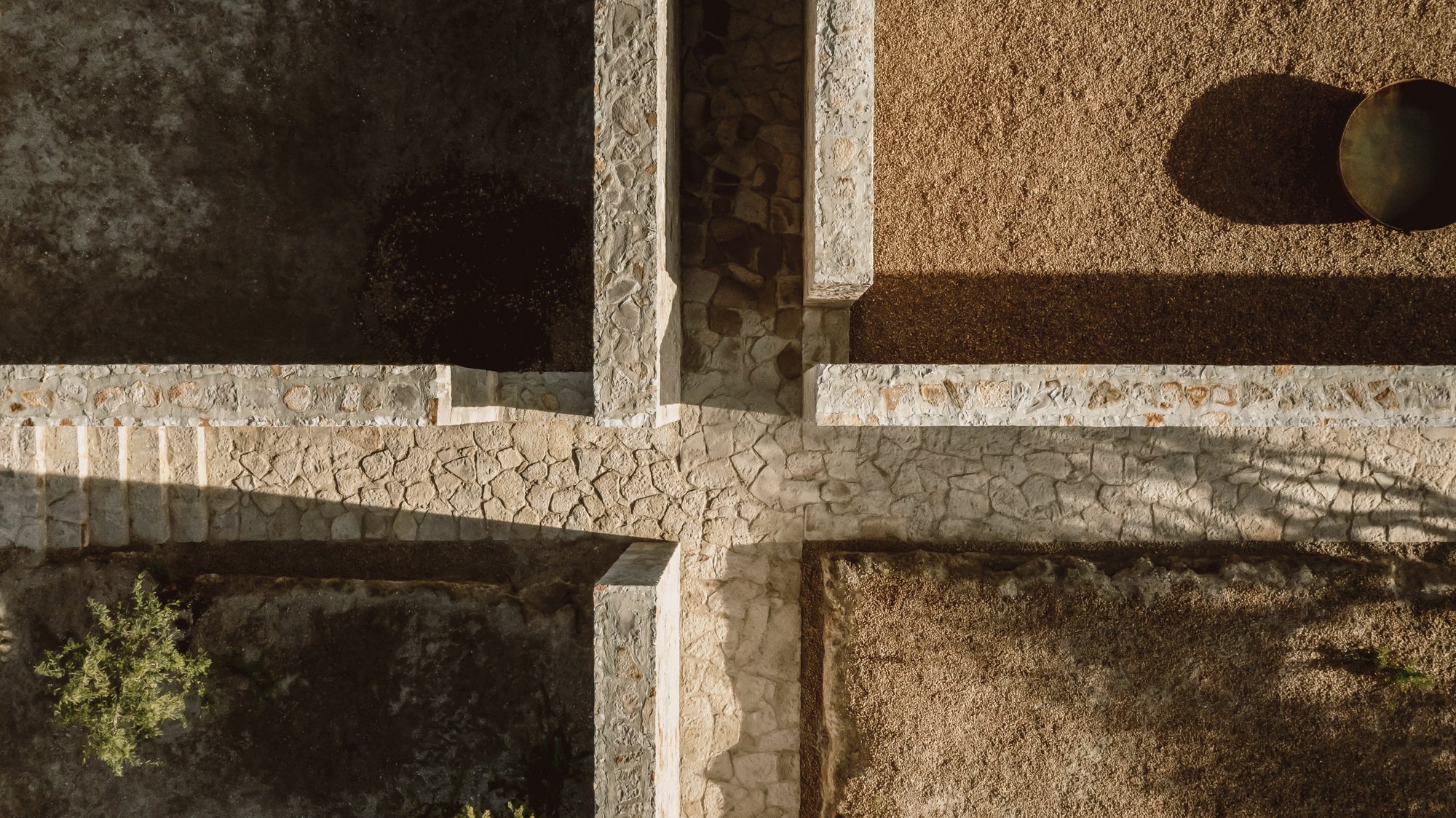
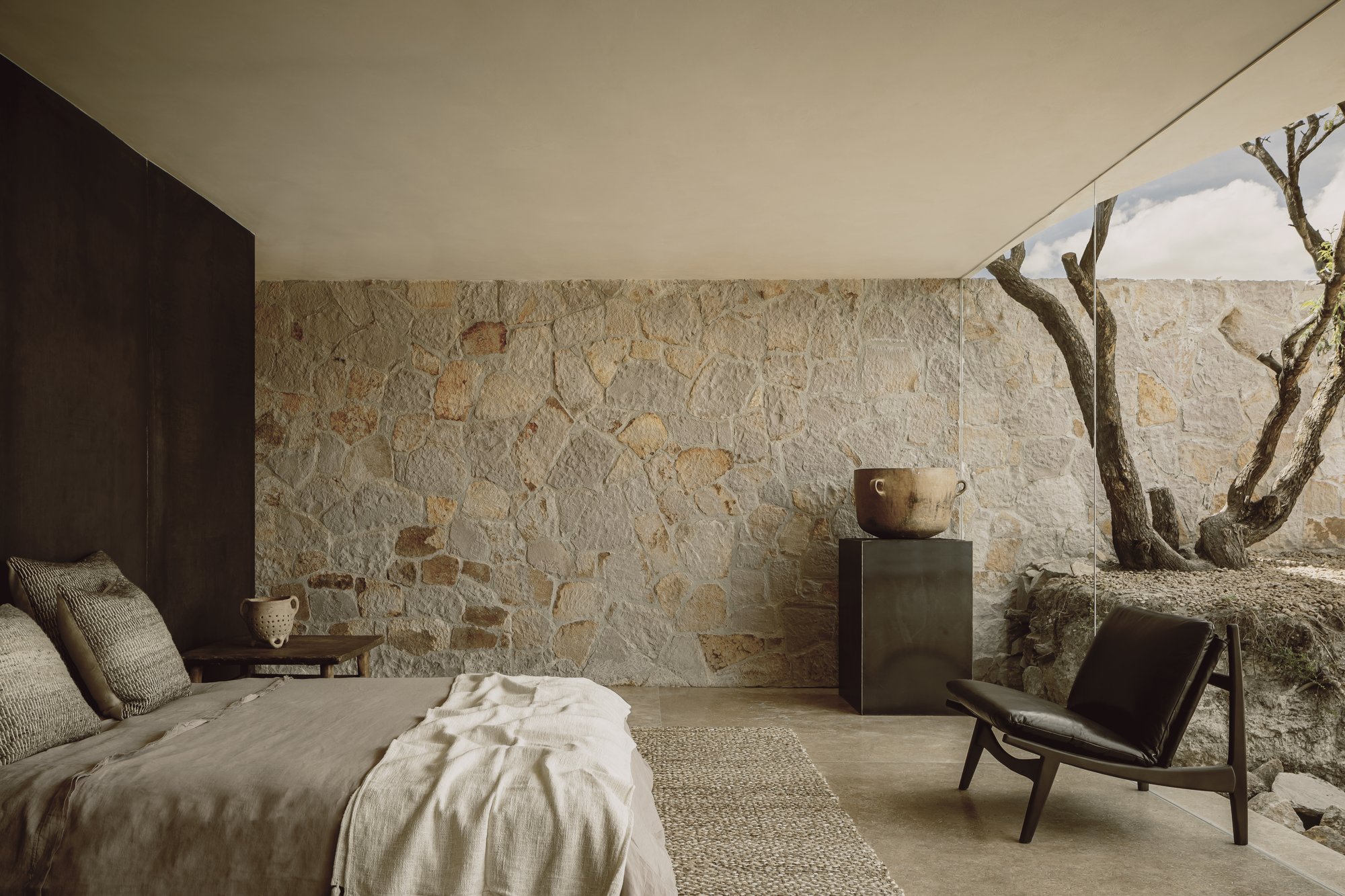
Casa Enso II, completed in 2022 outside San Miguel de Allende, works from the same conviction through entirely different means. The site is high desert, horizontal and arid, saturated with the constructive identity of Guanajuato, where stone appears in everything from aqueducts to kitchen utensils. The material chose itself. Fifty-centimeter walls of locally quarried cantera in a cruciform formation divide the site into four quadrants, each with a single purpose: garden, parking, house, office. Moving between them requires contact with earth, air, mountain. Bores described the experience as being in an ancient monastery that has become part of the landscape it frames. He called the project, with characteristic dryness, “the son of Mies and Fred Flintstone.”
The name Enso comes from a Buddhist term for an imperfect handmade circle — a symbol of fullness found in simplicity. The house offers very little and contains everything its inhabitants need.
Casa Tao
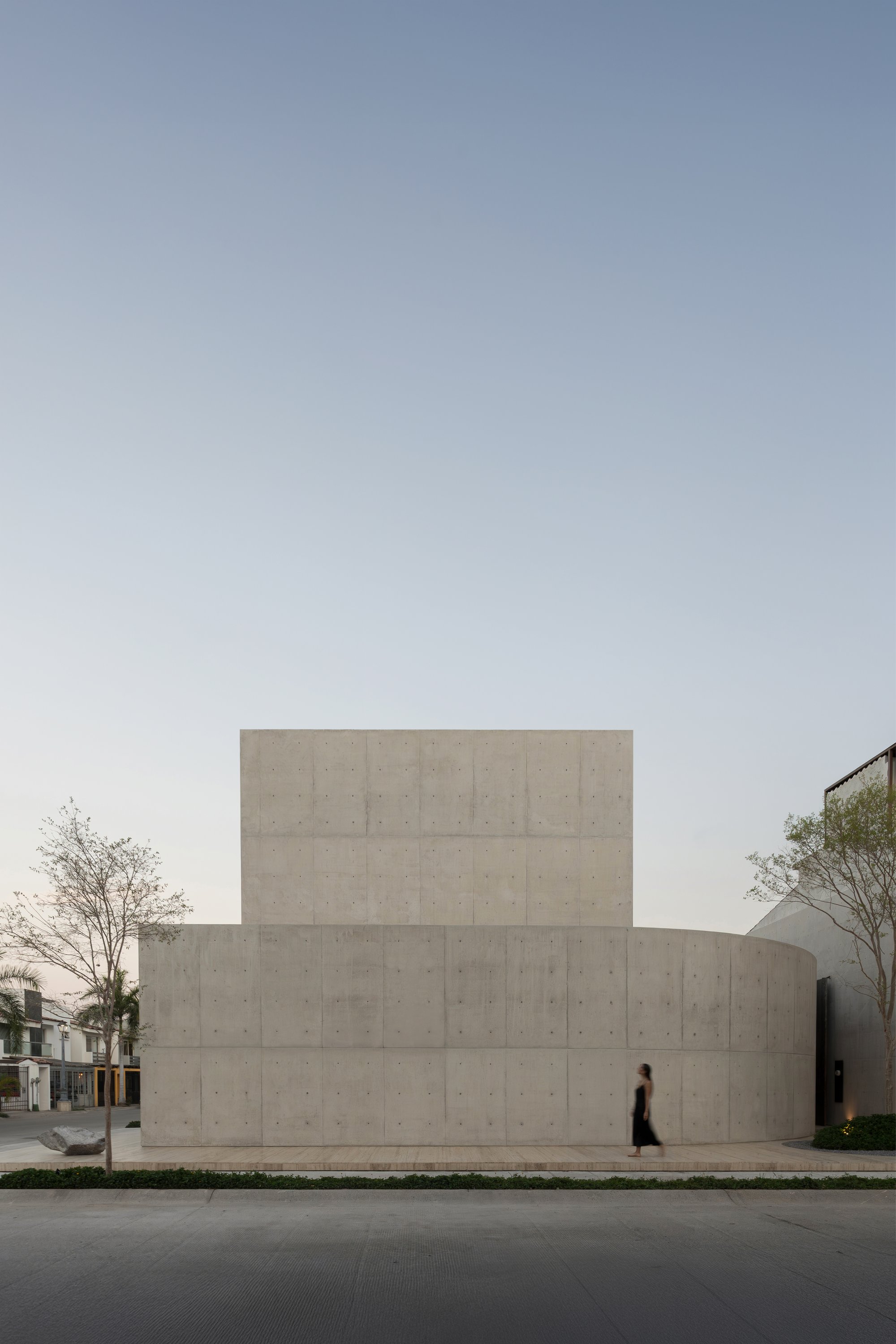
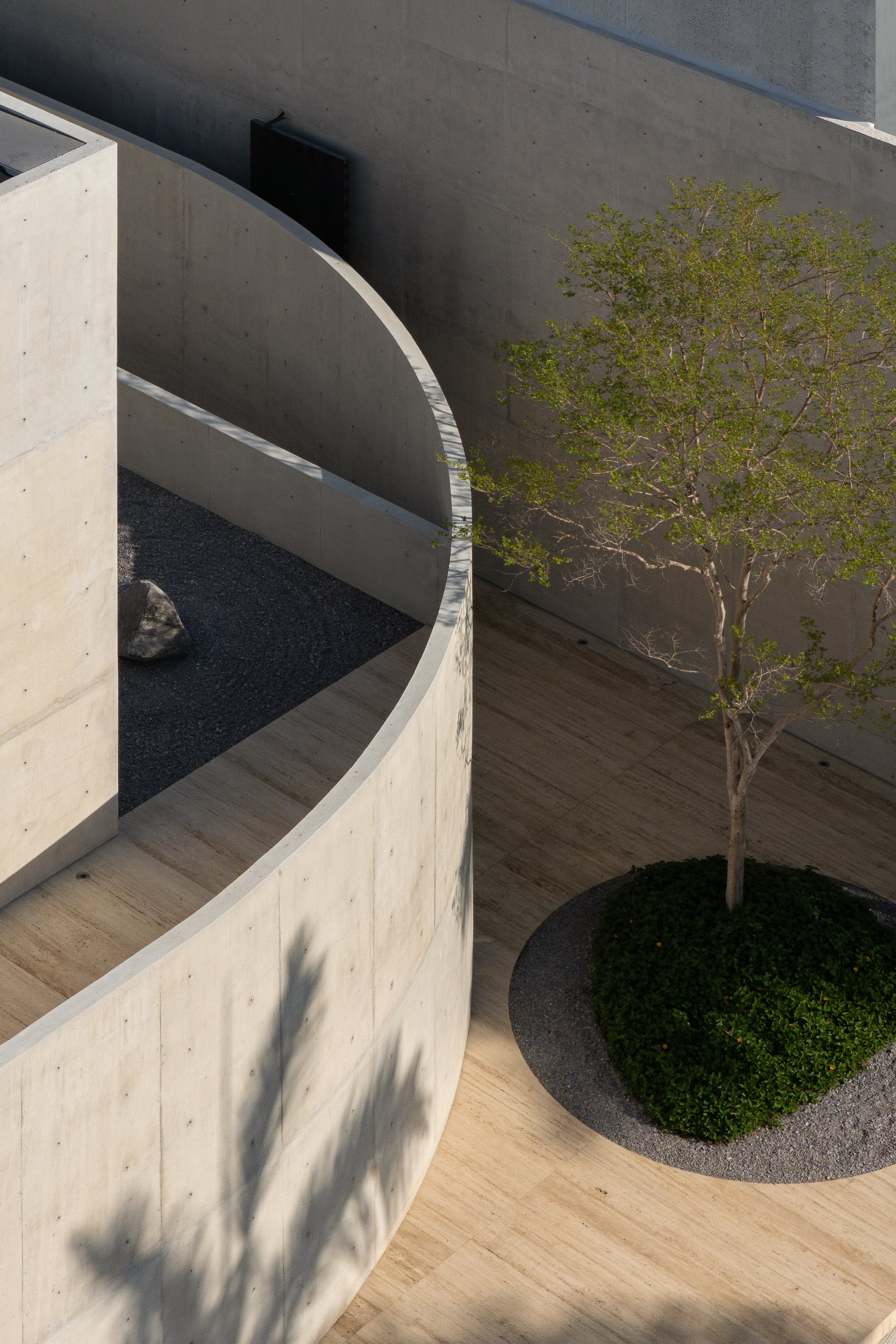
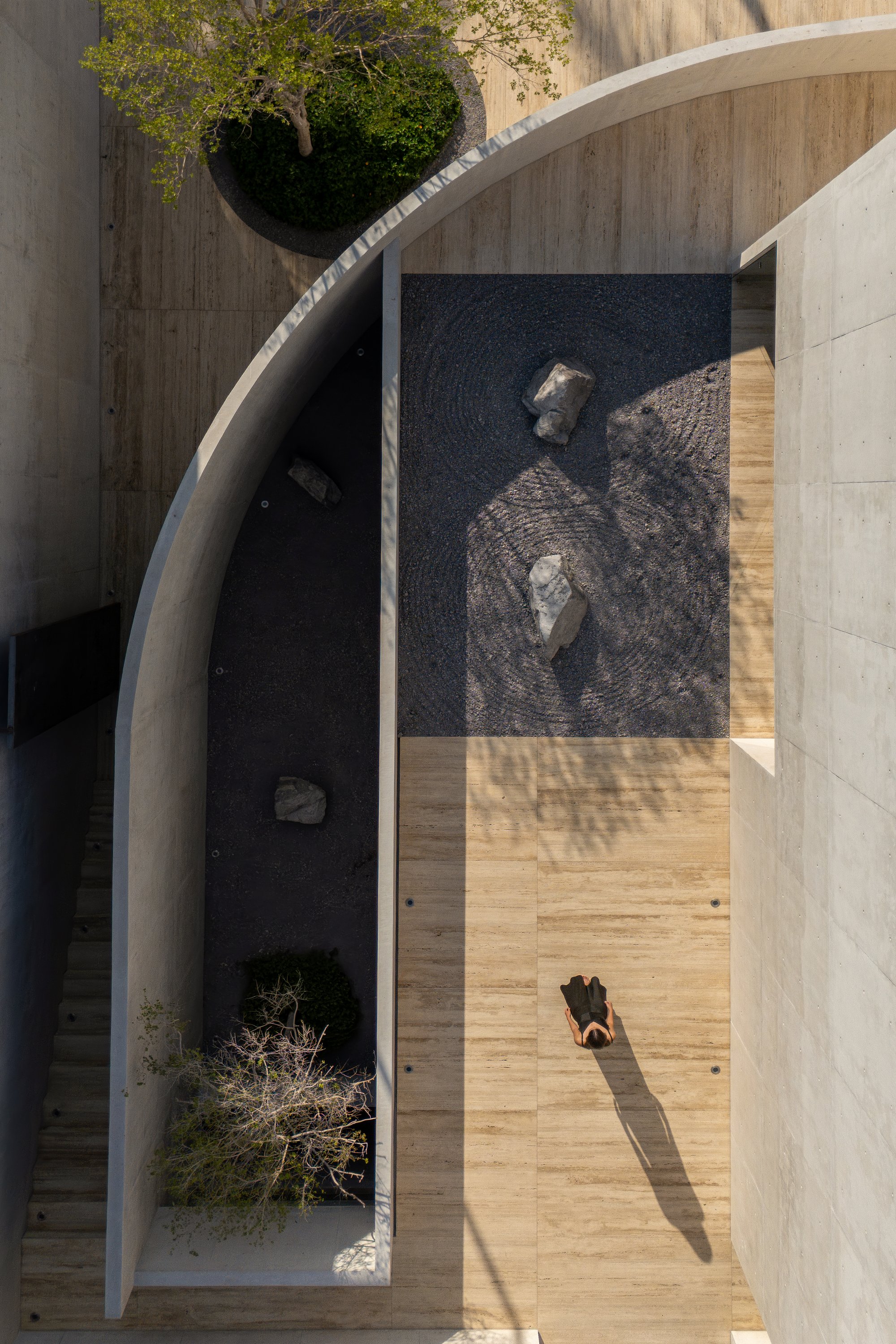
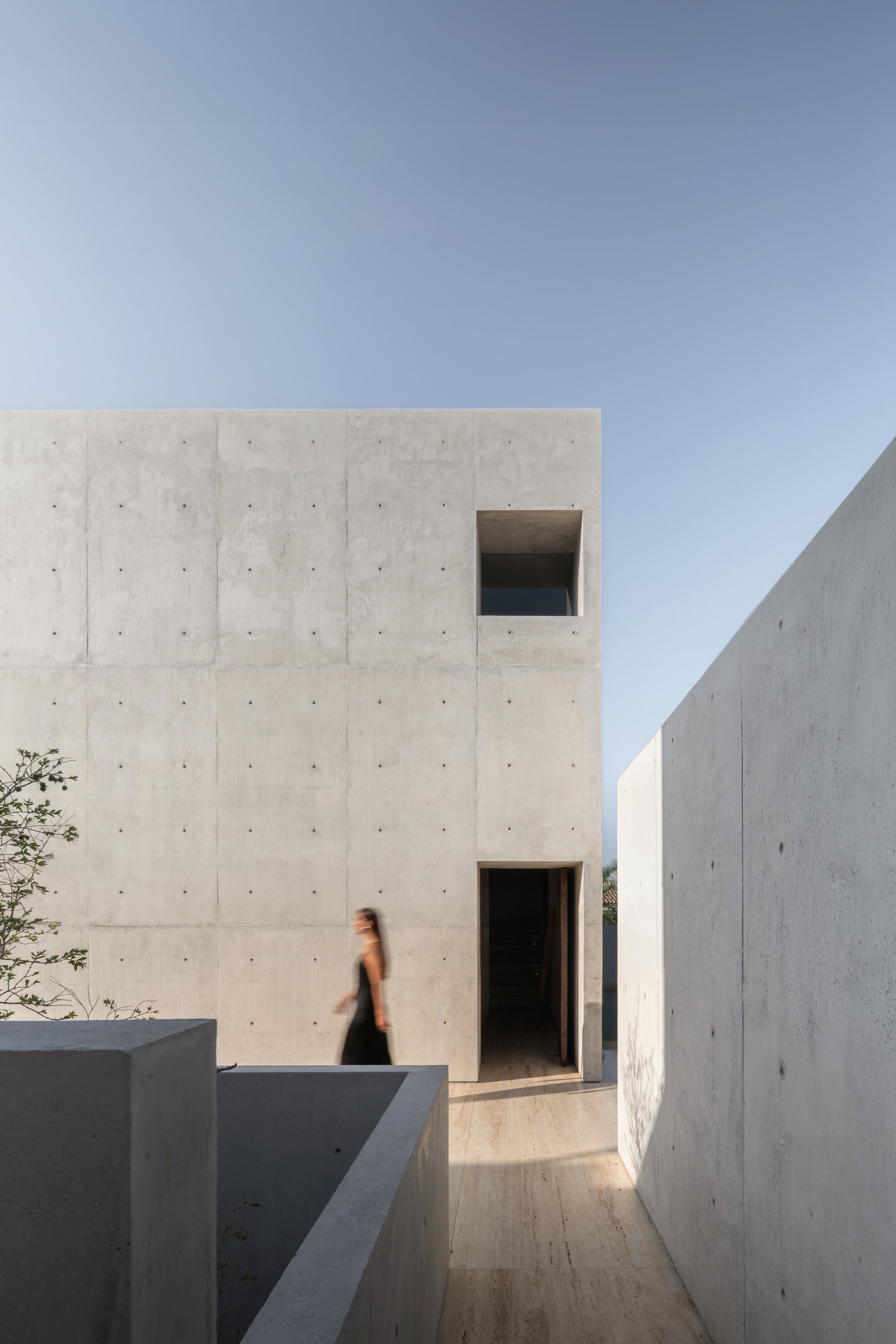
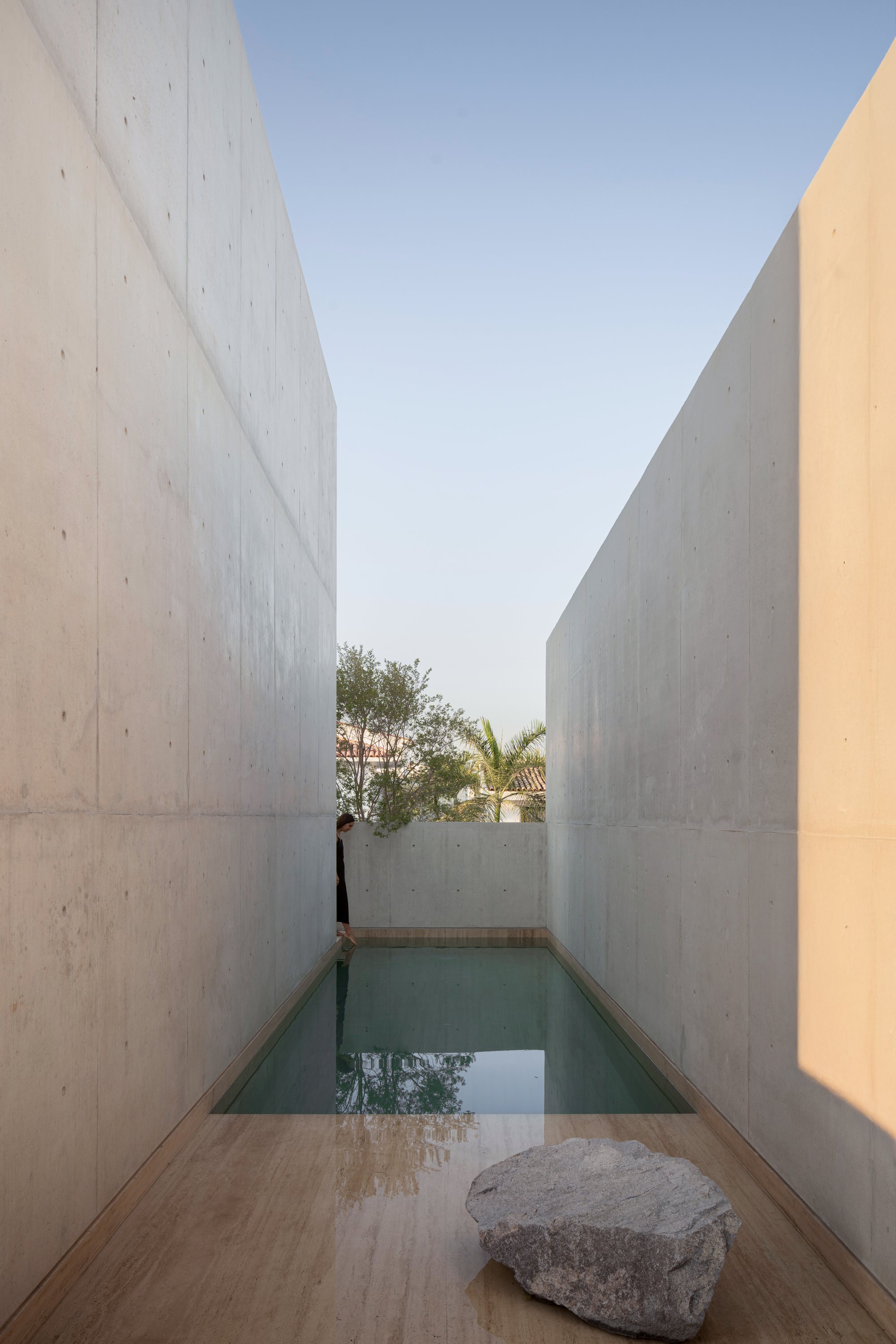
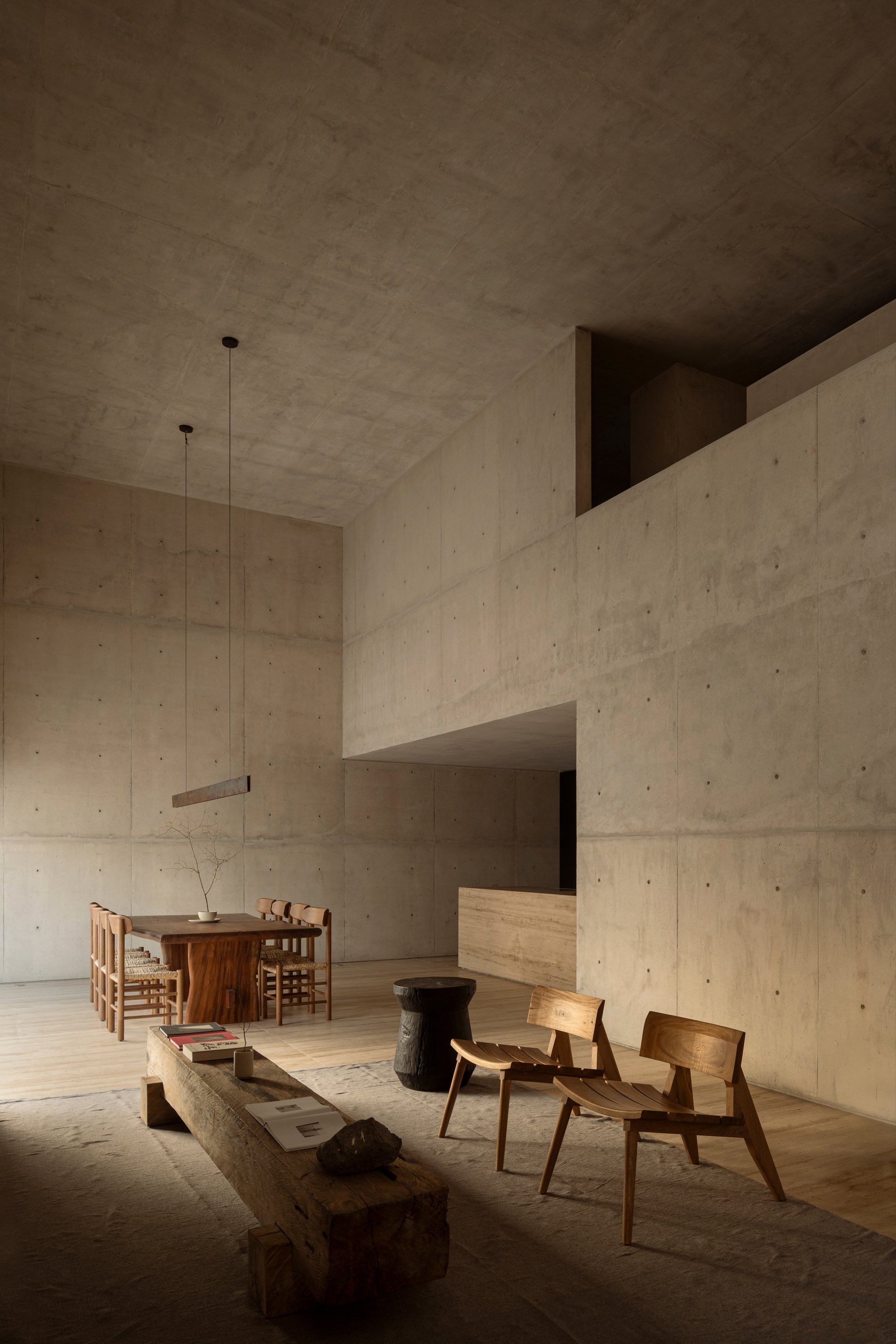
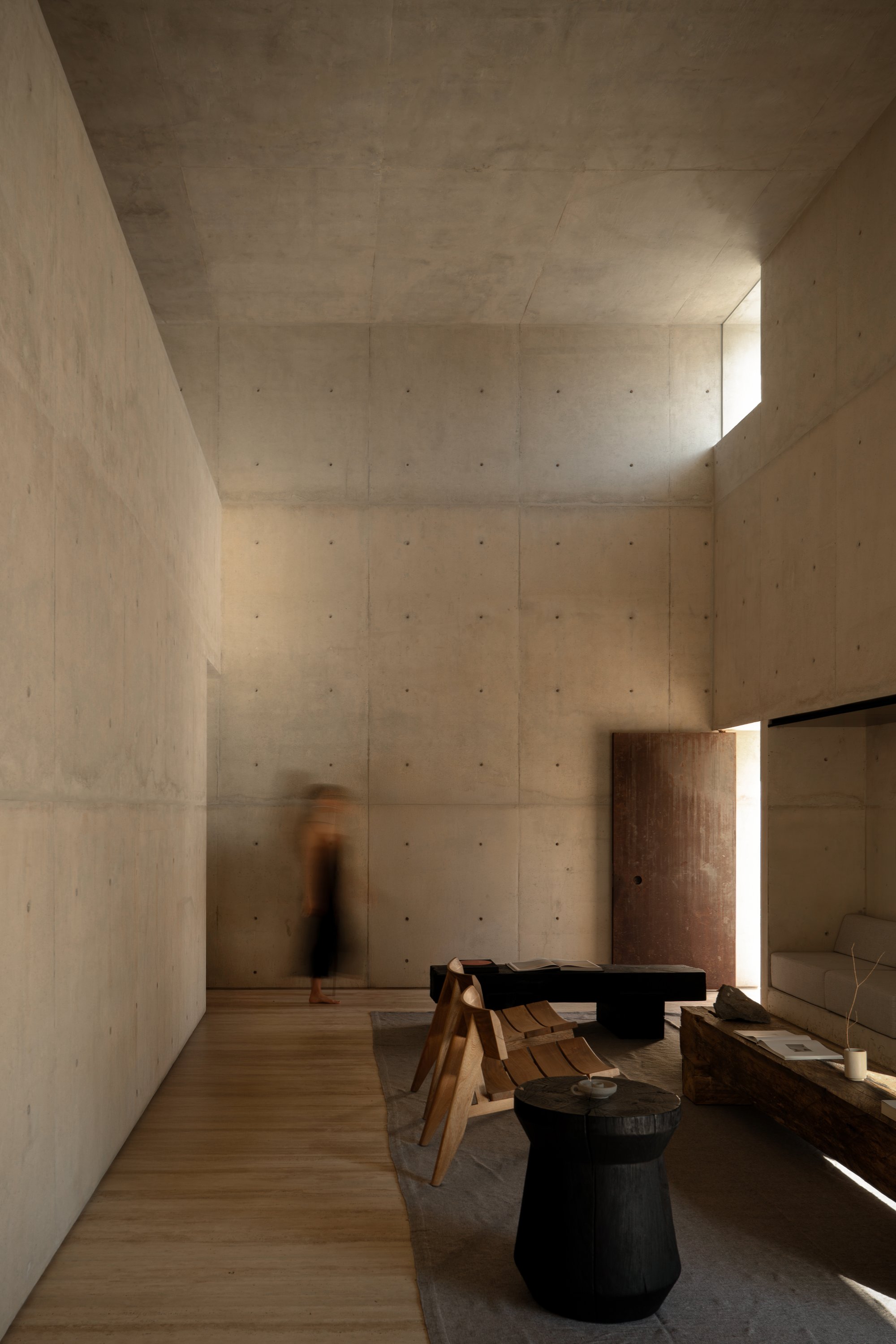
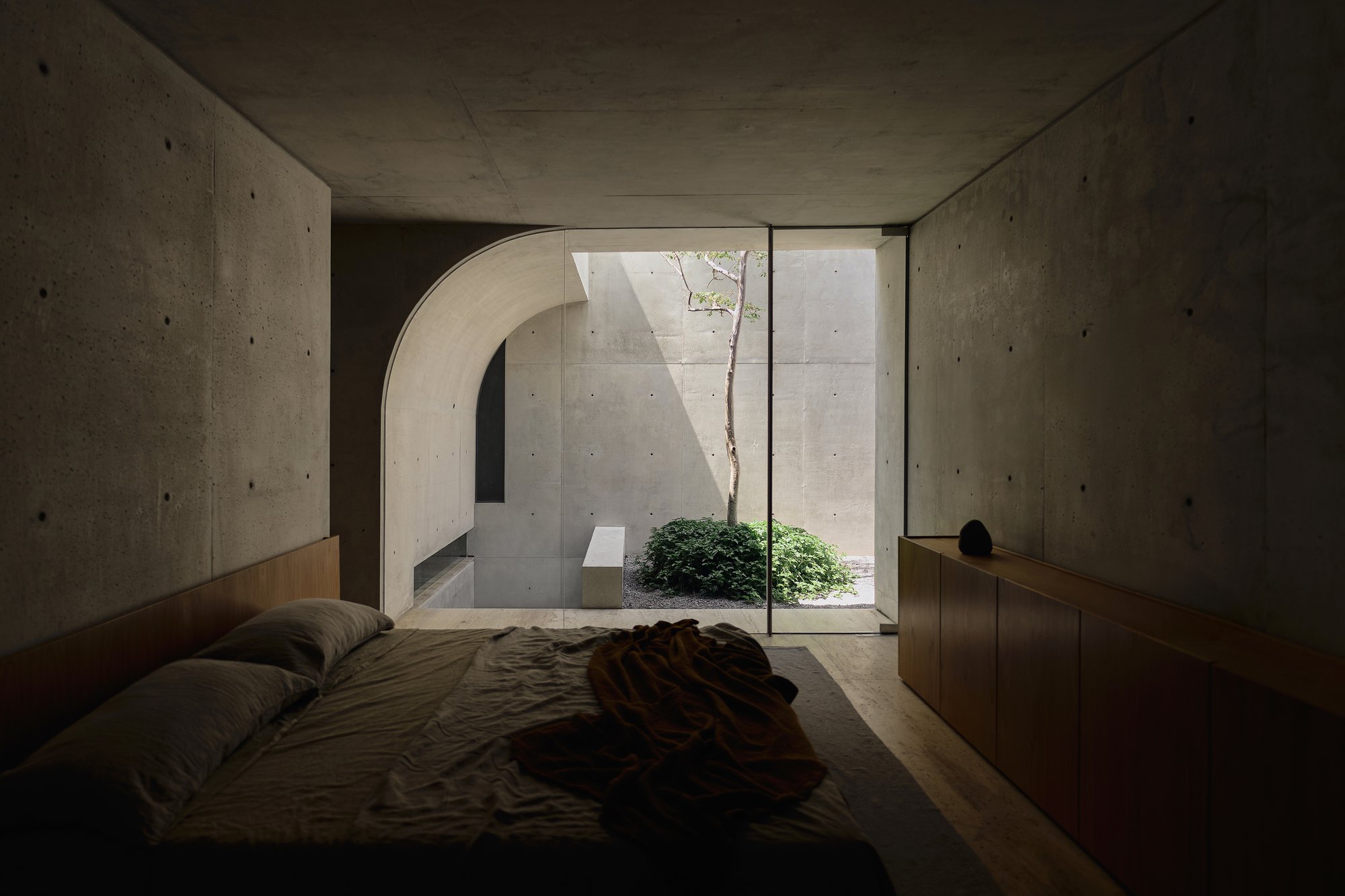
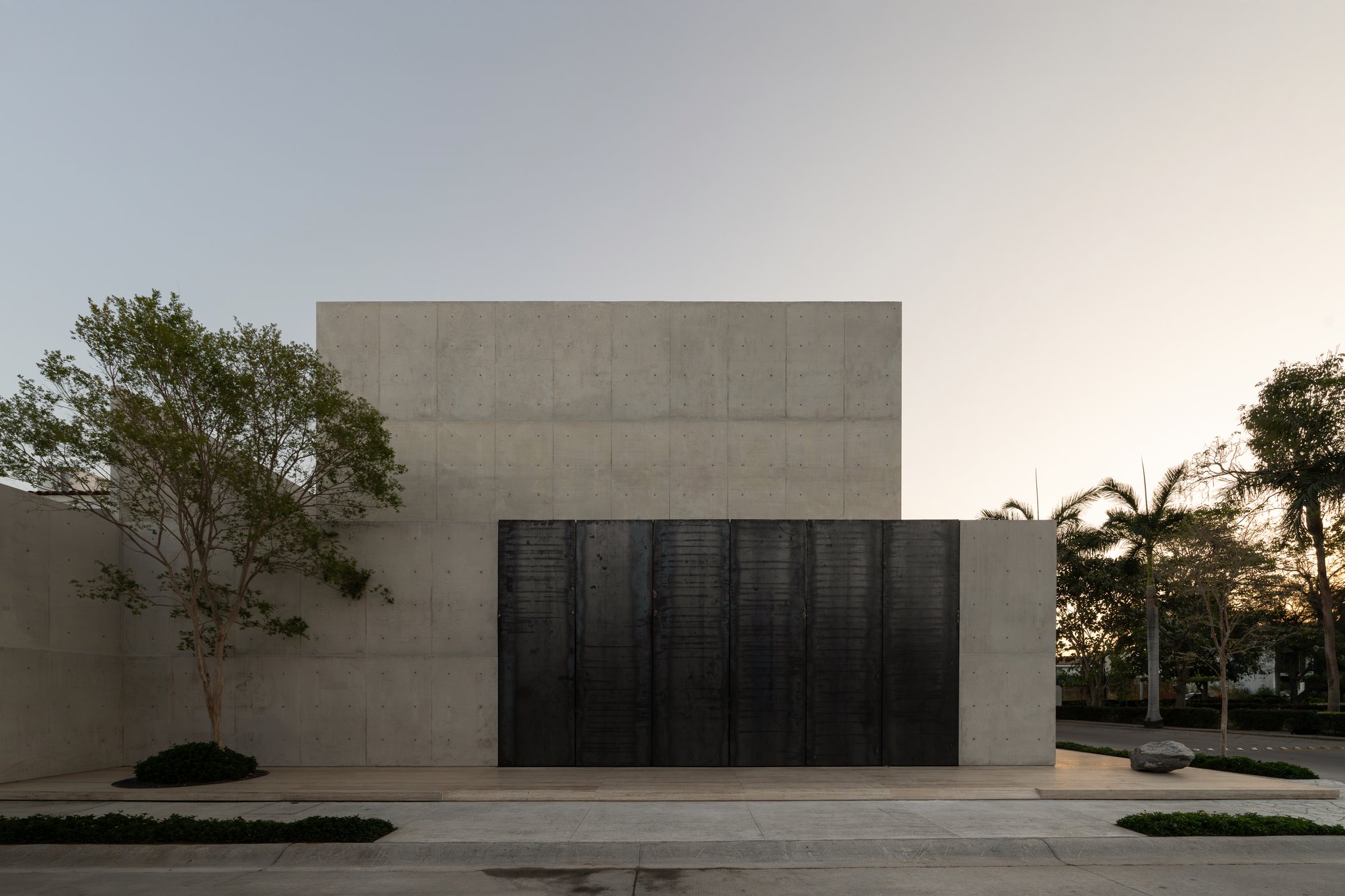
Casa Tao, in Puerto Vallarta, pushes the philosophy into a different climate and a different emotional register entirely. The clients — a family shaped by a trip to Japan, who asked to feel as if they were living inside a Japanese museum — brought Bores a specific desire: not the solemnity of an institution, but the quality of a space where time slows down, where light filters gently, where silence becomes tangible. Bores oriented the house not toward the street but toward a nearby tree-lined plaza, and even then obliquely, angled to catch the breeze and the fragrance of the sea without exposing the interior to direct sun.
The project description on the studio’s own site invokes Junichiro Tanizaki’s “In Praise of Shadows” — the Japanese essayist’s argument that shadow is not the absence of light but a subtler, more dignified way of experiencing it. Every corner invites one to remain, not to pass through. The shade is the architecture.
Four Principles, One Practice
I’ve been developing a reductive design framework around four principles. I didn’t build it with HW Studio in mind. But when I put their work against it, the alignment is difficult to ignore.
Organic Structure. HW Studio’s buildings feel less designed than discovered. Brutalist weight meets landscape fluidity. Linear concrete against rugged stone. Heavy volumes that seem, somehow, weightless. The cruciform walls at Enso II follow the desert’s own horizontality rather than asserting geometry over it. The wall at the Glen house bends around a tree rather than removing it — one curve in an otherwise rigorously linear plan, and that single departure makes the whole thing feel alive. At Casa Tao, a curved wall receives the visitor at the threshold, a gentle gesture that softens entry into a house that is otherwise precise and controlled. This is wabi-sabi at architectural scale: the lines are human, the materials are not, and the tension between them is where the work breathes.
Quiet Confidence. Restraint at this level is a position, not a style. Every addition to a design is, at some level, a hedge — a signal that the designer wasn’t sure the essentials were enough. HW Studio’s work communicates the opposite: we listened to the site, to the client, to ourselves, and this is the answer. Four materials. One question. The confidence lives entirely in what isn’t there. Azure Magazine captured this plainly, noting that HW Studio “always seeks to envision the spirit of a place as much as the form of the shelter” — which is another way of saying the building is never the point. The life inside it is.
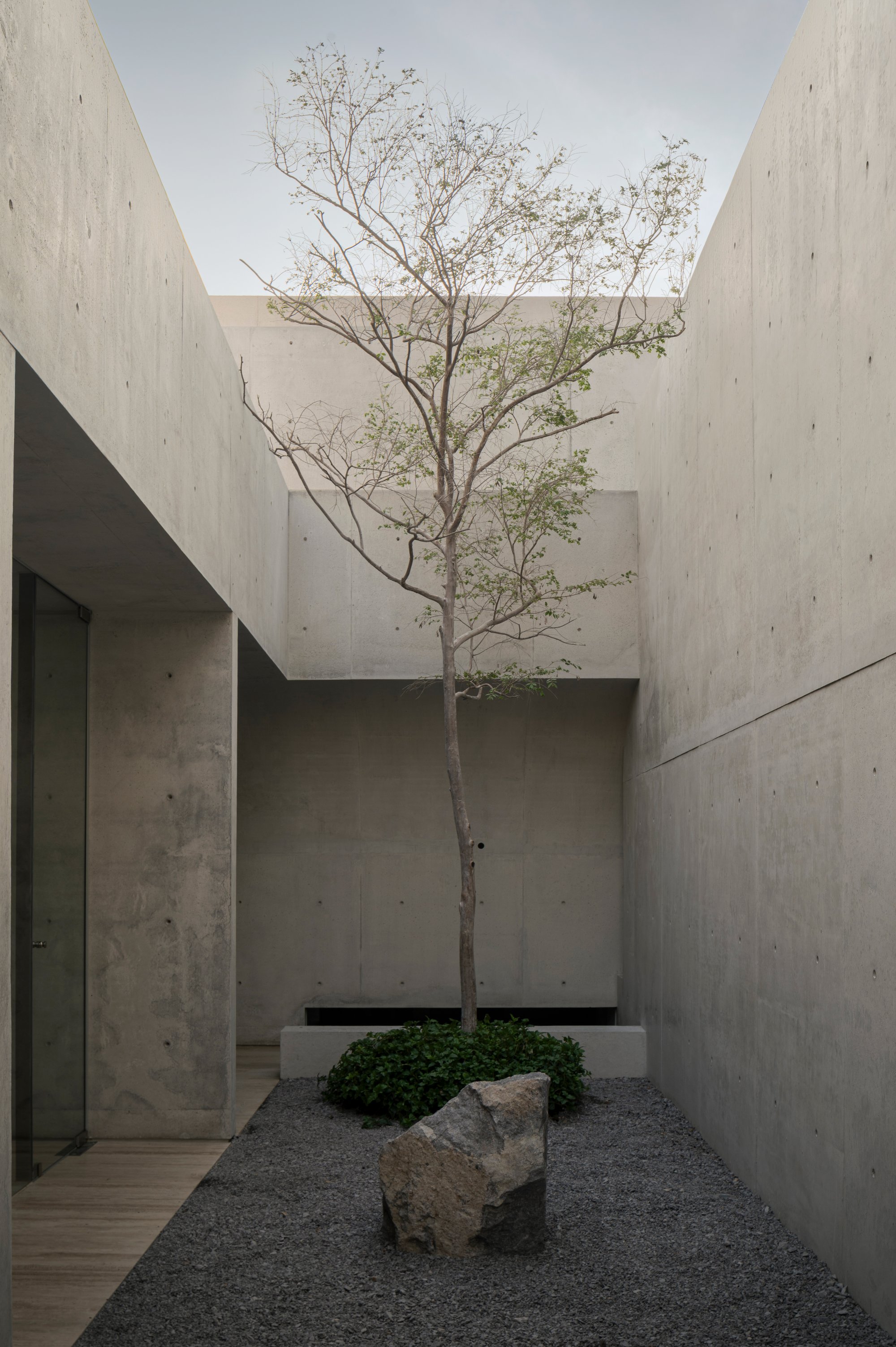
Complex Simplicity. The buildings read as spare, but the experience inside them is layered and precise in ways that take sustained attention to notice. The path at the Glen house is wide enough for one person and narrow enough to discourage two. The concrete was chosen partly because Bores envisioned it aging into the forest, graying into greens and yellows as moss and weather work on it over decades, becoming more itself over time. People are impressed by complexity. They are moved by simplicity. HW Studio works firmly on the side of what moves.
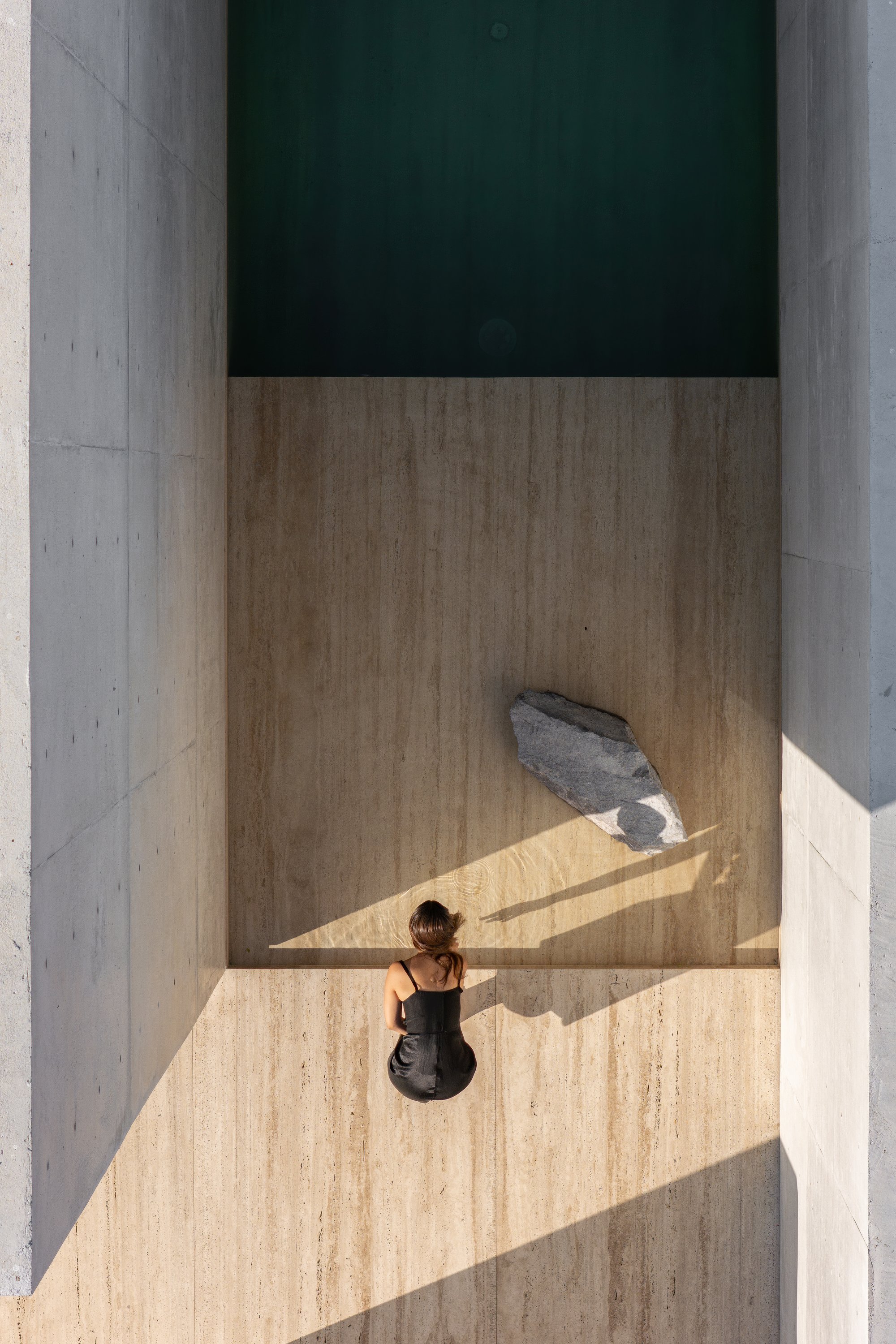
Human Technology. Technology, in this framework, is any method, material, or tool used to shape an experience. The measure of it is whether it disappears. HW Studio’s technologies are numerous and sophisticated — and almost entirely invisible in the finished work. Cantera stone at Enso II was quarried twenty minutes from the site and worked by craftspeople already fluent in it, producing walls that feel as if the land generated them. At Casa Tao, whiteness and concrete were chosen not for their appearance but for their behavior: how whiteness dazzles under the coastal sun, how concrete absorbs rather than reflects light, growing warmer with use and time. Bores achieves flush, frameless, seamless surfaces throughout his buildings — details that require obsessive precision and disappear completely once achieved. He credits his training under masters of materiality in Valencia, his close relationships with skilled craftspeople, and what he describes as the likely influence of his surgeon father’s obsessiveness.
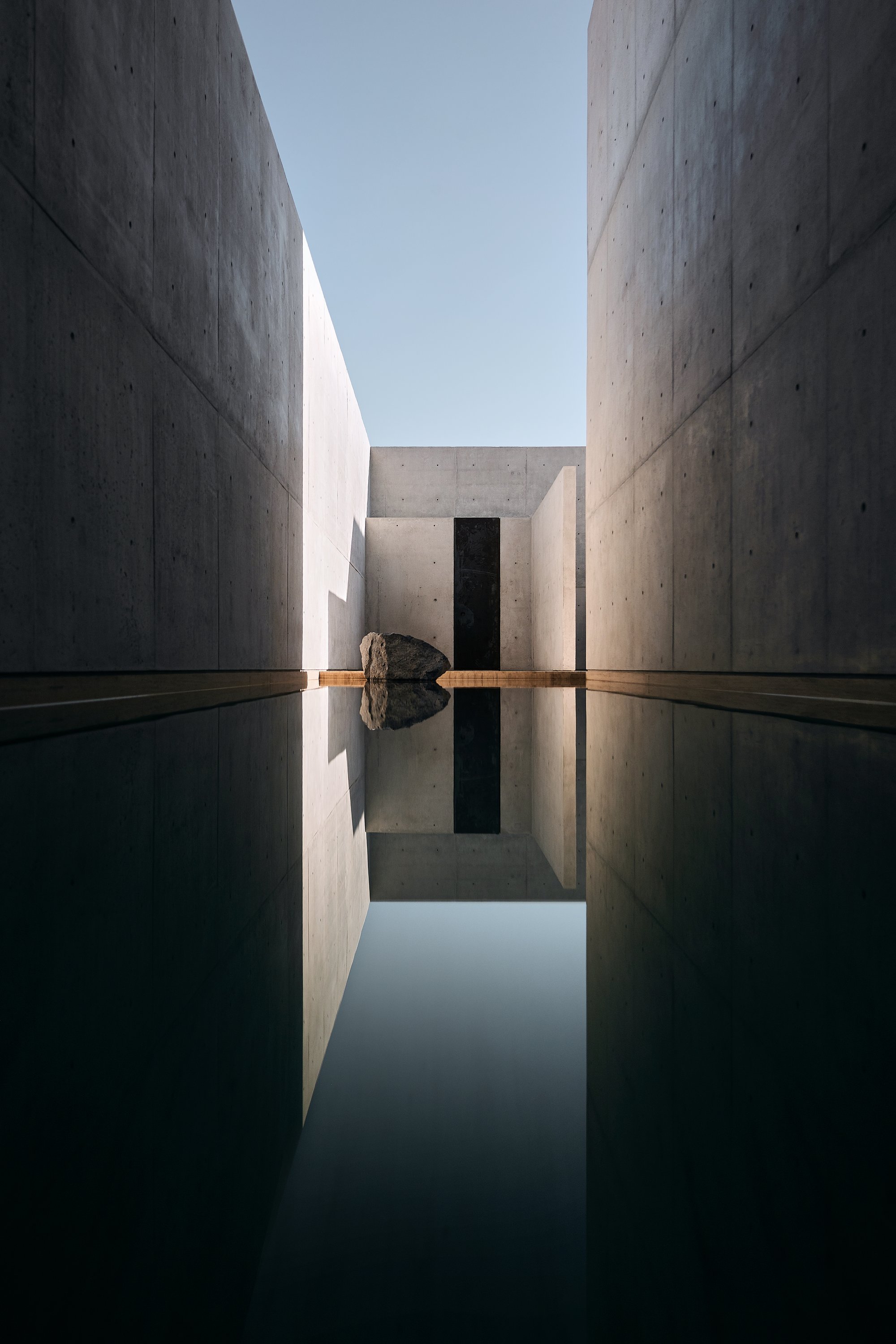
Bores articulated the underlying intention clearly when accepting the AZ Award: “In a world where the relentless pace of modern life and the noise of urban environments often overwhelm us, architecture emerges as a powerful tool to create spaces that invite reflection, silence and an intimate connection with oneself.” The technology serves that end — and only that end. When it’s doing its job, you don’t notice any of it.
All of it serves the same end: an experience that feels inevitable rather than designed. Places so true that they feel like they’ve always been. When spaces feel ancient and futuristic at the same time, they are truly timeless.
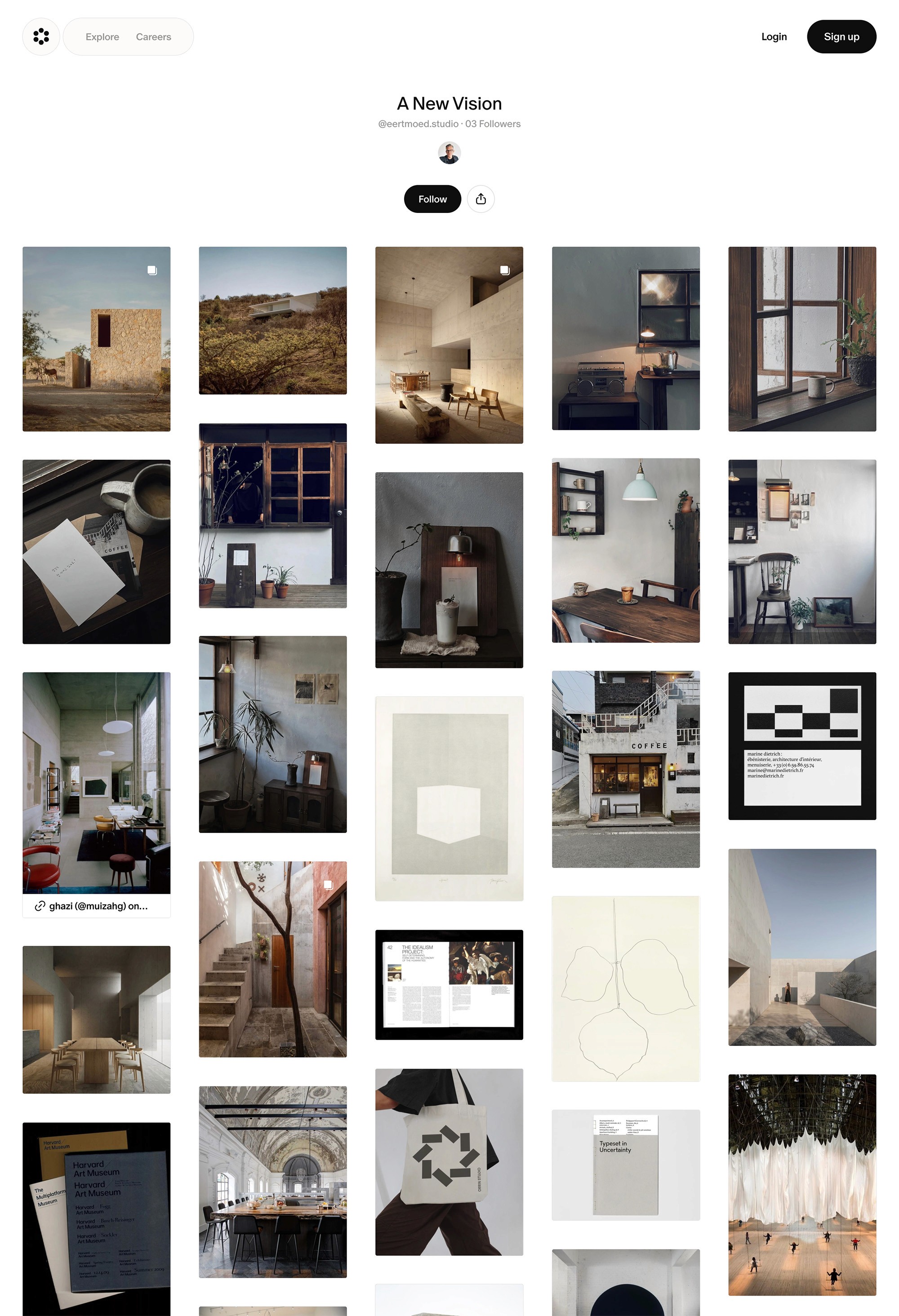
As I work toward defining this type of work for my own practice, the images I keep returning to are collected here: cosmos.so/eertmoed.studio/a-new-vision
What restraint actually requires
There’s something instructive in how HW Studio operates beyond the buildings themselves. They work 9 to 4. Four projects a year. A neuropsychologist on staff. Meditation before designing. None of it is personal branding. All of it is practice shaped entirely by what the work requires. A methodology.
The pressure to take more projects, move faster, build a larger portfolio — it exists in architecture exactly as it exists in brand design, in product design, in any creative field where output is visible and clients want to see options. HW Studio’s answer is to make restraint structural, so the temptation to compensate is never really available.
This coherence between philosophy and practice is what separates studios that talk about depth from studios that achieve it. There is no gap between what HW Studio believes and what they build. The work is quiet because the practice is quiet. The spaces recede because the studio does.
Bores puts it simply: “We try to create an open space ready to embrace the life that will inhabit it.”
Their reference point in Mexican architecture is Luis Barragán, who wrote that serenity is the great antidote to anguish and fear, and that it is the architect’s duty to make it a permanent guest of space, regardless of how humble or sumptuous that space may be. HW Studio didn’t invent this idea. They committed to it with enough conviction that it organized everything else. And in doing so, made an argument that extends well beyond architecture.
That recognition is now arriving in the places that matter. Architectural Digest named HW Studio to its AD100 list of the most influential architects and designers in Mexico and Latin America. Azure Magazine gave them the inaugural Emerging Architecture award in 2025. None of it has changed how they work. Four projects a year. 9 to 4. One thing at a time.
The only thing we need more of is restraint.
HW Studio has been proving it, one quiet building at a time.
HW Studio is based in Morelia, Michoacán, Mexico. Featured projects: The Hill in Front of the Glen (2021), Casa Enso II (2022), Casa Tao (2024). This is part of an ongoing series of case studies on reductive design.
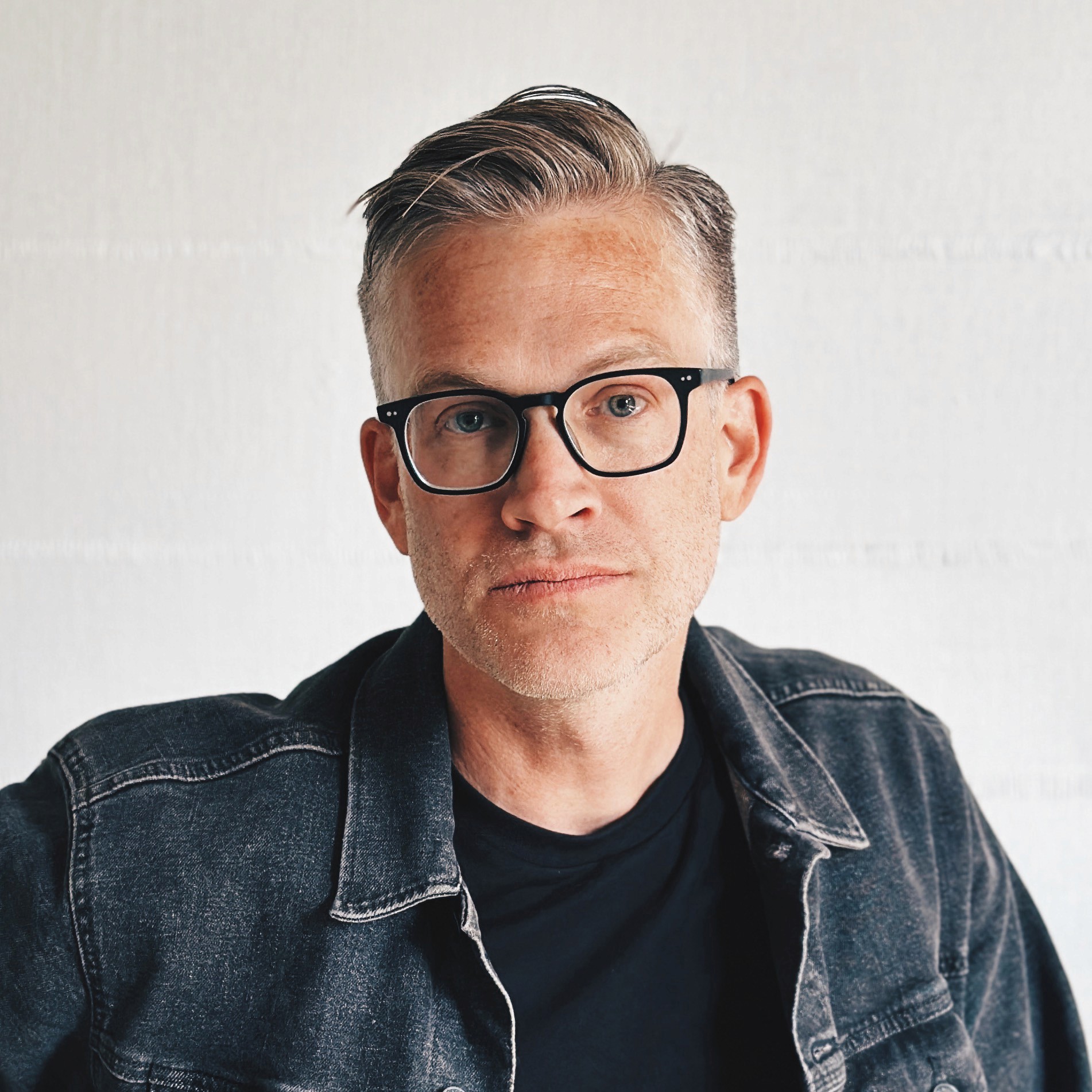
Kyle Eertmoed is founder and designer of Eertmoed Studio, a brand design practice based in Chicago. His work is built around the philosophy of reductive design, the conviction that most brands don’t need more. They need help finding who they are meant to be.